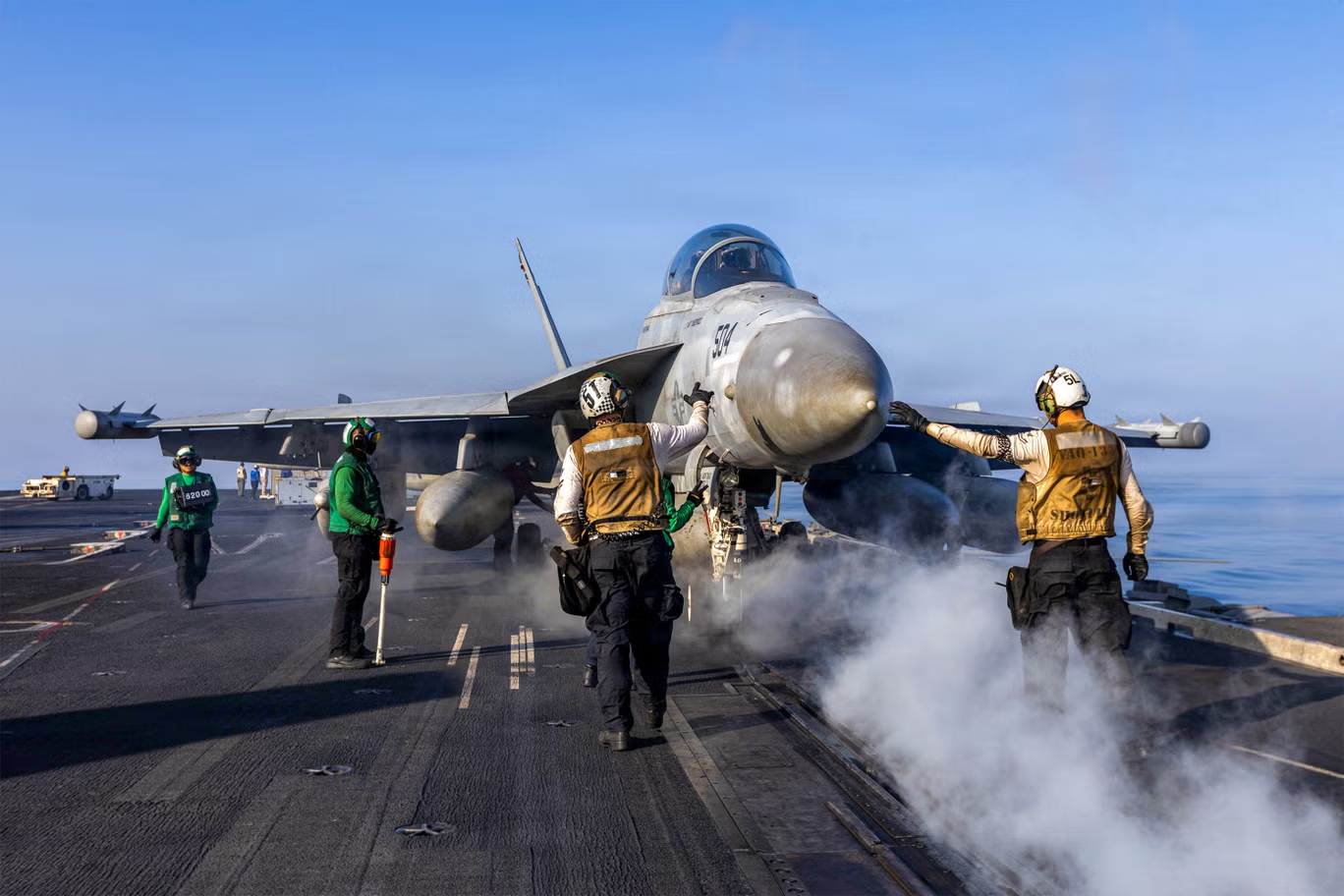

WASHINGTON — The escalating military conflict between the United States and Iran, dubbed “Operation Epic Fury,” could drain as much as $210 billion from the American economy, according to new projections from the Penn Wharton Budget Model. As the Trump administration weighs naval escorts for oil tankers in the Strait of Hormuz, volatility in global energy markets has already triggered a sharp rise in domestic fuel prices, signaling a prolonged period of fiscal strain.
The Fiscal Toll of “Operation Epic Fury”
Data released Tuesday by Kent Smetters, director of the Penn Wharton Budget Model, suggests that the ongoing strikes against Iran are creating deep disruptions in trade and global energy supplies. While the baseline estimate for economic loss currently sits at $115 billion, the figure is highly volatile.
Depending on the duration and intensity of the engagement, the total economic impact could swing between $50 billion and $210 billion.
“One problem I have with cost-of-war calculations is that they really do ignore the counterfactual,” Smetters told Fortune. He noted that while the current costs are significant, they must be weighed against the potential long-term military expenditures required if Iran were to successfully develop a nuclear weapon.
Economic Impact Estimates
| Impact Category | Estimated Cost (Low) | Estimated Cost (High) |
| General Economic Loss | $50 Billion | $210 Billion |
| Direct Military Budgetary Spending | — | $65 Billion |
| Total Potential Exposure | $50 Billion | $275 Billion |
Energy Markets React as Trump Pledges Tanker Escorts
President Donald Trump took to Truth Social on Tuesday to address the growing concern over energy security, asserting that the U.S. Navy is prepared to intervene to maintain global supply lines.
“If necessary, the United States Navy will begin escorting tankers through the Strait of Hormuz, as soon as possible,” the President stated. “The United States will ensure the FREE FLOW of ENERGY to the WORLD.”
Despite these assurances, the immediate market reaction has been one of unease:
- Crude Oil: West Texas Intermediate (WTI) rose by more than 5% by Tuesday’s closing bell.
- Gasoline Prices: The national average jumped more than 10 cents per gallon, according to AAA.
While Trump acknowledged that oil prices may remain elevated “for a little while,” he expressed optimism that prices would eventually drop below pre-war levels once the conflict concludes.
The “Tail Risk” of Sustained Conflict
Market analysts warn that the administration’s timeline for the conflict may be overly optimistic. While the President suggested in a letter to Congress that the bombing campaign could last “four to five weeks,” seasoned policy experts fear a quagmire.
“Markets are right now really under-pricing the tail risk of a sustained engagement,” said Alex Jacquez, former Biden economic adviser and current chief of policy at the Groundwork Collaborative. He noted that a failure to quickly de-escalate and restore safe passage through the Strait of Hormuz could lead to a far more “sustained operation” than the public currently expects.
Beyond the broader economic contraction, the Pentagon is facing a $65 billion price tag for the direct costs of marshaling air and naval forces across the Middle East. In his formal communication to Congress, the President admitted that it is “not possible at this time to know” the full scope or duration of the necessity for military operations.
Looking Ahead
As “Operation Epic Fury” enters its next phase, the White House is expected to face increasing pressure from both sides of the aisle to provide a definitive exit strategy. The focus now shifts to the Strait of Hormuz; if the U.S. Navy begins active escort missions this week, the potential for a direct naval confrontation with Iranian forces increases significantly—a move that could either stabilize markets through force or ignite a further spike in global oil prices.