
Global energy security reached a critical inflection point Monday as crude prices surged and international transit hubs faced direct kinetic attacks. A sophisticated Iranian drone strike temporarily crippled Dubai International Airport, while a de facto blockade of the Strait of Hormuz continues to choke a fifth of the world’s oil supply, stoking fears of a protracted global economic crisis.
The escalation follows a weekend of intense multi-front warfare, including renewed U.S.-Israeli strikes on Tehran and a widening Israeli air campaign in Lebanon. With Brent crude stubbornly hovering above $100 per barrel—a 45% increase since the onset of hostilities on February 28—Washington is facing mounting pressure to restore maritime order in the face of what Tehran calls a “war of no retreat.”
Chaos at the World’s Busiest Transit Hub
At dawn on Monday, an Iranian-launched loitering munition struck a fuel storage tank near Dubai International Airport (DXB). The strike ignited a massive fireball, forcing the world’s busiest hub for international passenger traffic to suspend all operations.
While Emirati authorities confirmed that the blaze was contained with no reported casualties, the psychological and economic impact was immediate. Flights resumed after several hours, but the vulnerability of the United Arab Emirates’ (UAE) critical infrastructure was further exposed by a subsequent missile strike in Abu Dhabi that claimed one life, and a separate drone attack on an oil facility in the eastern emirate of Fujairah.
The Strait of Hormuz Stranglehold
The most significant threat to the global economy remains the maritime blockade of the Strait of Hormuz. Iranian naval assets and shore-based missile batteries have effectively halted commercial traffic through the waterway.
- Market Impact: Brent crude traded at $104 early Monday, having spiked as high as $120 during the conflict.
- Regional Defense: Saudi Arabia reported intercepting a “wave” of 35 Iranian drones targeting its Eastern Province, the heart of the Kingdom’s oil production.
- Diplomatic Deadlock: Iranian Foreign Minister Abbas Araghchi dismissed rumors of a ceasefire, stating early Monday that Tehran is seeking neither “truce nor talks.”
Trump Issues Ultimatum to Global Allies
In Washington, President Donald Trump has linked the maritime crisis to domestic economic stability ahead of the fall elections. On Sunday, the President revealed he has demanded that at least seven nations—reportedly including the U.K., France, China, South Korea, and Japan—contribute warships to a coalition to “police the strait.”
The appeal has so far yielded no firm commitments. “Whether we get support or not… we will remember,” Trump warned, suggesting that nations declining to assist may face diplomatic or trade repercussions. He further hinted at delaying a high-stakes trip to China to pressure Beijing into leveraging its influence over Tehran.
European response remains fractured. While EU Foreign Policy Chief Kaja Kallas indicated the bloc may discuss extending existing naval missions, German Foreign Minister Johann Wadephul expressed skepticism, arguing that security in the region requires a “negotiated solution” rather than military escalation.
Escalation in Tehran and Beirut
On the ground, the military situation continues to deteriorate:
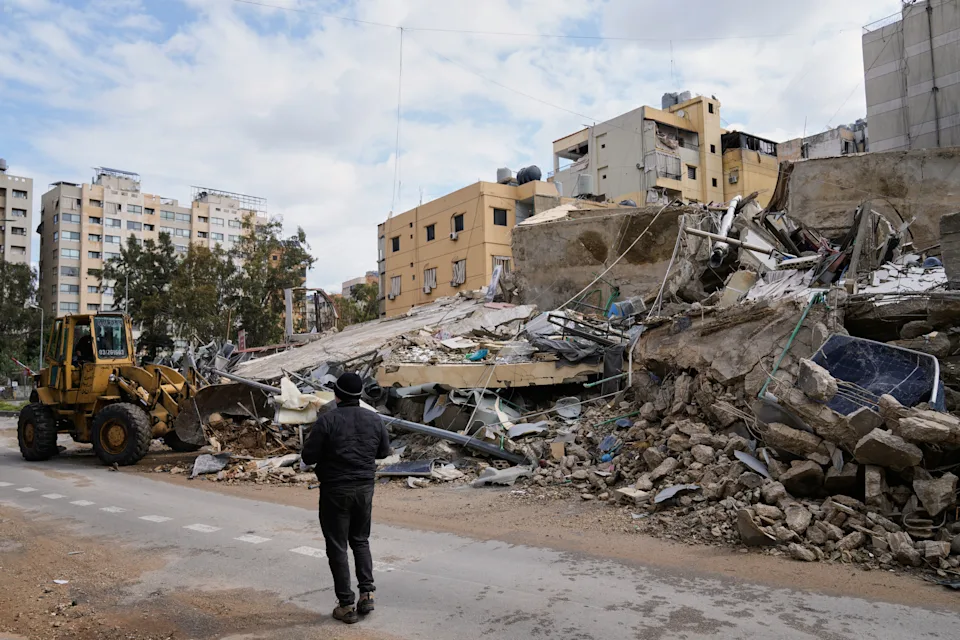
- Lebanon: Israeli airstrikes leveled targets across Beirut and southern Lebanon, targeting Hezbollah-linked infrastructure. Lebanese authorities report over 850 deaths and the displacement of 800,000 people to date.
- Iran: Massive explosions rocked Tehran on Monday as Israel launched fresh waves of strikes. Israeli military spokesman Lt. Col. Nadav Shoshani claimed that 85% of Iran’s air defenses and 70% of its missile launchers have been neutralized across 7,600 strikes, though he noted thousands of targets remain.
- Casualties: The Iranian Red Crescent estimates over 1,300 deaths in Iran. Conversely, Iranian fire has claimed the lives of 12 people in Israel and 13 U.S. service members in the region.
vAs the Strait of Hormuz remains largely impassable, central banks warn that the combination of rising energy costs and fertilizer shortages could trigger a global recession, hitting developing nations the hardest.