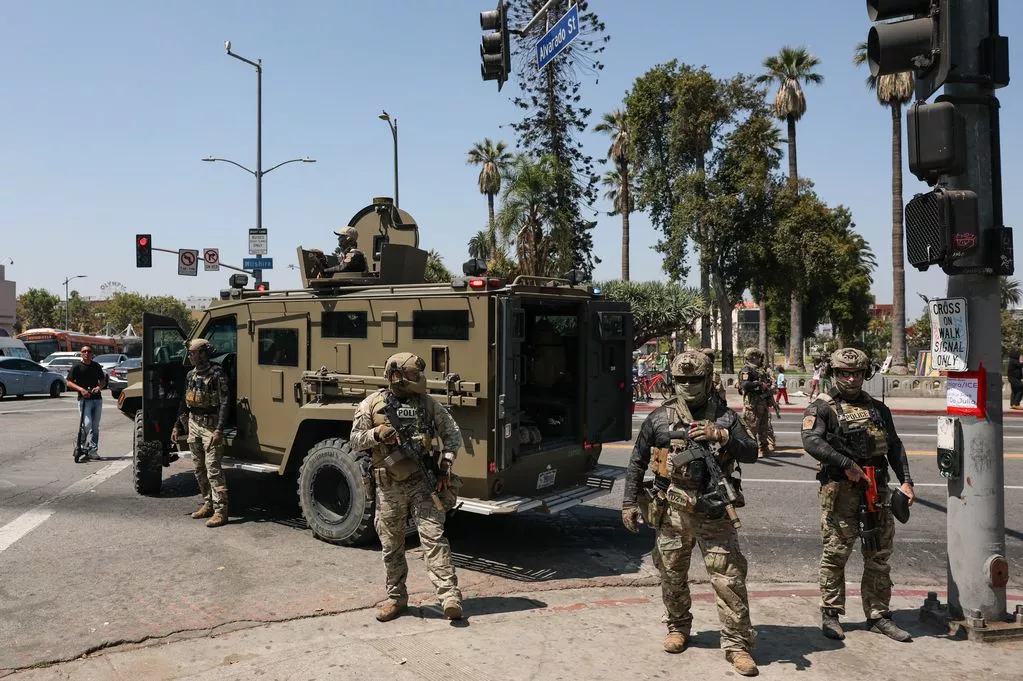

In Los Angeles’s MacArthur Park, a summer camp abruptly ushered children indoors as a convoy of federal agents and mounted officers rolled into the area on Monday. Though arrests were not immediately confirmed, the message was clear: the raids aren’t stopping—and neither is the fear.
The Trump administration’s aggressive immigration enforcement has become a daily source of anxiety for immigrant communities across the city. What began as a series of high-profile operations in early June has since grown into a full-blown campaign of intimidation, leaving economic, emotional, and social scars in its wake.
A Neighborhood Paralyzed by Fear
In MacArthur Park—a longtime hub for Central American and Indigenous communities—residents have grown afraid to leave their homes or visit beloved local establishments. Business at B&Z Osorio Restaurant, located just across from the park, has been cut in half. CO, an employee who requested anonymity for safety reasons, said the fear is palpable.
“When the troops came, the security guard ran inside stores warning everyone. People eating inside ran out to their cars,” CO said. “We had to pull down the metal gate. Since then, my uncle has reduced hours and cut produce orders—there just aren’t enough customers.”
Even offering discounts hasn’t helped. “People are scared to be seen out. They’d rather cook at home. It’s safer,” CO said.
Targeting Without Cause
Over the past month, immigration advocates and civil rights groups have condemned the raids as racially discriminatory and legally dubious. In a lawsuit filed this month, they accused federal agents of targeting individuals based on appearance, language, and location.
On Friday, a federal judge issued a temporary restraining order barring agents from stopping people without “reasonable suspicion” of an immigration violation. The order explicitly prohibits stops based on race, accent, or presence at certain locations—such as car washes, bus stops, or job sites—where dozens of arrests have occurred.
Despite this legal pushback, DHS has already arrested nearly 2,800 individuals across the region. The majority, according to limited data, had no criminal history. Many were deported within days; others are held in detention centers where families struggle to contact them or secure necessary medication.
One Ventura County farm raid resulted in 200 arrests—and the death of a farmworker who fell from a 30-foot building while fleeing ICE agents.
A City on Edge
MacArthur Park, often called the “Ellis Island of the West,” is not just symbolic—it’s a lifeline for immigrant families. It hosts free meal programs, summer camps, and countless small businesses. But now, a climate of fear has taken hold.
Jerica Medina, a Honduran cosmetician, said her two salons near the park are emptier than during the COVID-19 pandemic.
“I’m sad and angry,” she said, wiping tears. “You know what Hitler did? That’s what it feels like now. Except now everyone has a cellphone to record it.”
Outside the Home Depot on Wilshire Boulevard, day laborers cautiously returned after weeks of low turnout following the first wave of arrests. Volunteers from community organizations now patrol the area with binoculars, monitoring for ICE vehicles and distributing legal rights information.
“This has become a network of care,” said Fernando Isaí of the Los Angeles Tenants Union. “People are scared, but they’re also coming together.”
Psychological Toll Mounts
At a nearby shop offering natural supplements and holistic care, business has dropped. But calls from anxious clients have surged. “People are losing sleep. They’re depressed,” said Violet, the store owner, who declined to share her last name. “But we tell them to stay hopeful. This will pass.”
As federal raids continue, some fear that hope is becoming harder to hold onto. For now, MacArthur Park remains quiet, tense, and watched—its people caught between survival and resistance.