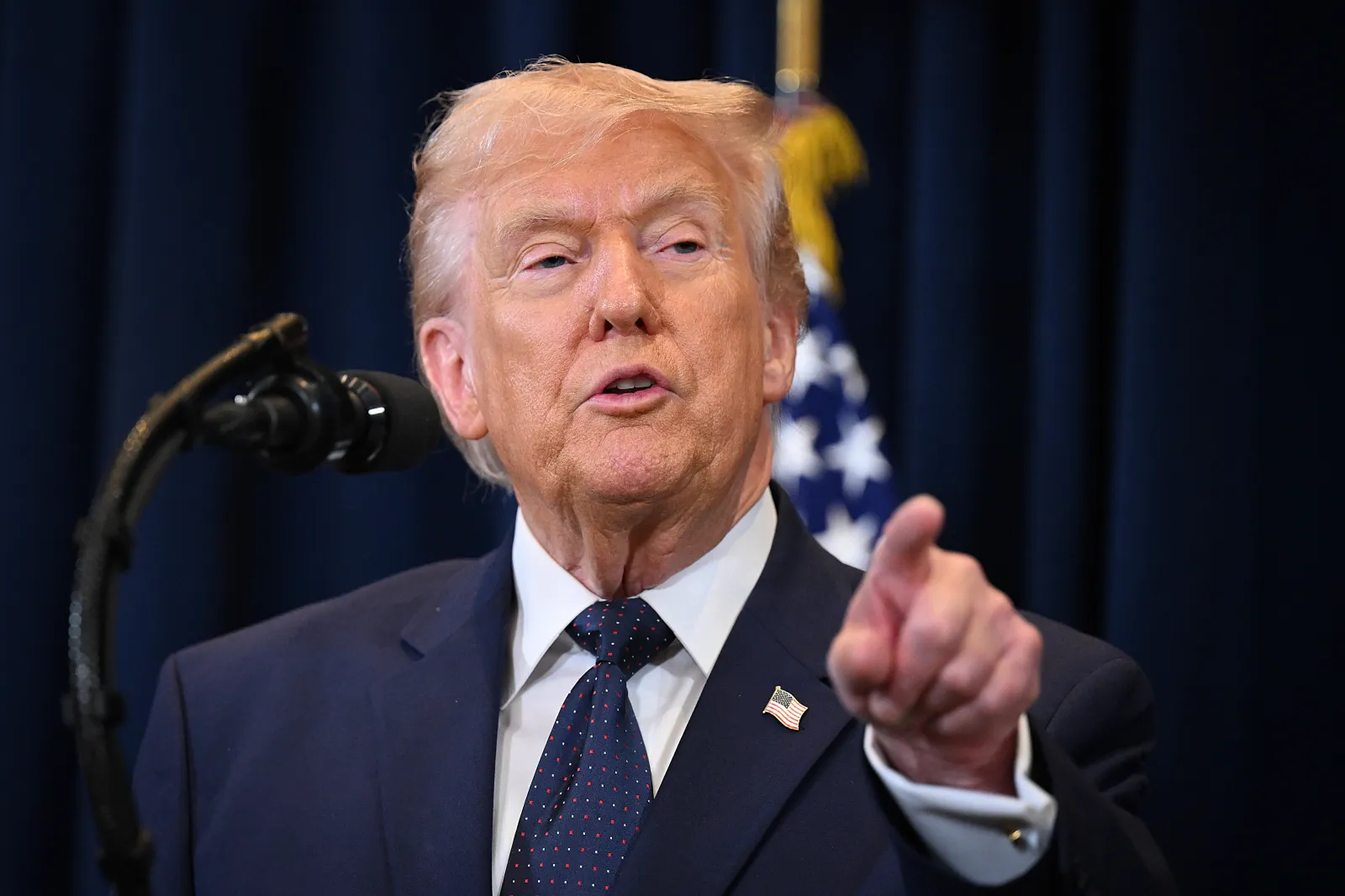

President Donald Trump’s physical fitness has returned to the center of national debate following a White House ceremony on March 20, where the president once again touted his health while standing alongside former White House physician Rep. Ronny Jackson (R-TX).
During a presentation of the Commander-in-Chief’s Trophy to the U.S. Naval Academy football team, Trump paused his remarks to praise Jackson, claiming the congressman previously found him to be in better health than former Presidents George W. Bush and Barack Obama. The exchange, characterized by critics as performative, has reignited scrutiny into the transparency of medical reporting coming from the Executive Mansion.
The White House continues to maintain that the 79-year-old president is in “excellent overall health.” In October 2025, current physician to the president Dr. Sean Barbabella reported Trump’s weight at 224 pounds and his height at 6’3”.
However, these figures have drawn sharp criticism from medical observers and the public alike. At a reported BMI of 28, Trump would technically fall into the “overweight” category, yet skeptics argue the visual evidence suggests a significantly higher weight. Comparisons have been drawn to professional athletes of similar reported dimensions, further fueling allegations that the administration is massaging vital statistics to project an image of vigor.
Beyond the height and weight disputes, investigative focus has shifted to a series of recurring physical symptoms:
- Skin Discoloration: Frequent photography has captured bruising on the president’s hands and a persistent rash on his neck. While Press Secretary Karoline Leavitt has dismissed these as minor, they persist as points of public concern.
- Mobility and Cognitive Markers: Observers have noted the president’s increased reliance on aides or the First Lady when navigating stairs, along with instances of slurred speech and reported lethargy during afternoon briefings.
- Clinical Diagnoses: In 2025, the president was reportedly diagnosed with chronic venous insufficiency, a condition that can lead to the swollen ankles and skin discoloration frequently cited by critics.
The reliance on Rep. Ronny Jackson to bolster the president’s health narrative has, for many, had the opposite of its intended effect. Jackson, who served as physician to both Obama and Trump, has faced long-standing criticism for his “effusive” 2018 assessment that Trump could live to be 200 years old with a better diet.
As the president enters the latter half of his term, the gap between official medical releases and public observation continues to widen. For an administration built on the projection of strength, the mounting visual evidence of aging and physical ailment presents a growing challenge to its preferred narrative of “exceptional fitness.”