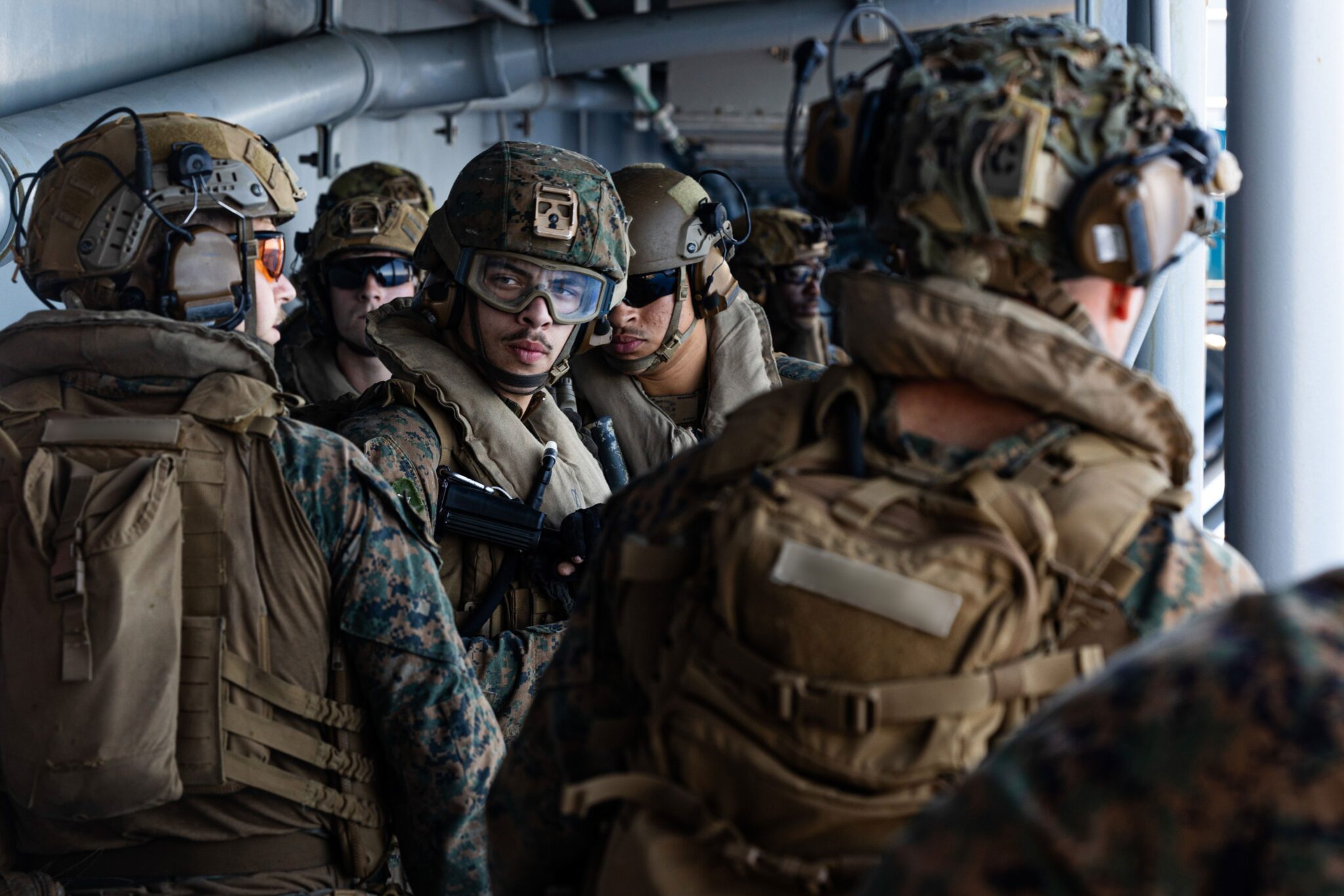

The conflict between the United States and Iran reached a volatile pivot point Monday as 3,500 U.S. Marines and sailors arrived in the Middle East. The deployment, confirmed by U.S. Central Command on March 29, coincides with a high-stakes diplomatic ultimatum from the Trump administration as the war enters its second month.
The Pentagon is currently weighing a broader troop surge. While reports indicate the administration is considering a ground invasion force of up to 10,000 soldiers, Secretary of State Marco Rubio suggested a preference for strategic leverage over a land war.
Speaking after the G7 summit in Paris, Rubio stated that the U.S. can achieve its objectives without a ground invasion but emphasized that the military buildup provides President Trump with “maximum optionality.” Rubio predicted the conflict would conclude in “weeks, not months.”
The Diplomatic Ultimatum
The military escalation serves as a backdrop to a looming April 6 deadline. President Trump has warned Tehran that it must reopen the Strait of Hormuz or face devastating kinetic strikes on its domestic power infrastructure.
White House Special Envoy Steve Witkoff indicated that Washington expects a response to a formal 15-point peace plan this week. “We think there will be meetings this week; we’re certainly hopeful,” Witkoff told a business forum in Miami, suggesting the proposal could resolve the month-long hostilities.
Tehran Signals Defiance
Despite U.S. optimism for a diplomatic breakthrough, Iran has issued a series of aggressive rebukes. Iranian Parliament Speaker Mohammad Bagher Ghalibaf accused Washington of using peace talks as a “guise” for a ground invasion.
“The enemy talks of negotiations but plans a ground invasion,” Ghalibaf told state media. “Our forces are ready, and we will never be humiliated.”
The rhetoric in Tehran has turned increasingly lethal. The state-aligned Tehran Times published a front-page warning to U.S. forces on Sunday, featuring an image of American troops with the caption: “Welcome to hell. U.S. troops who step foot on Iranian soil will leave only in coffins.”
Global Economic Fallout
The continued blockade of the Strait of Hormuz is exerting severe pressure on the global economy. Major energy importers, including India, are reporting significant struggles to meet domestic demand as the primary maritime route for Middle Eastern crude remains obstructed.
As the April 6 deadline approaches, the Biden-Trump transition era’s most significant foreign policy crisis sits on a knife’s edge: a negotiated settlement or a massive escalation into Iranian territory.