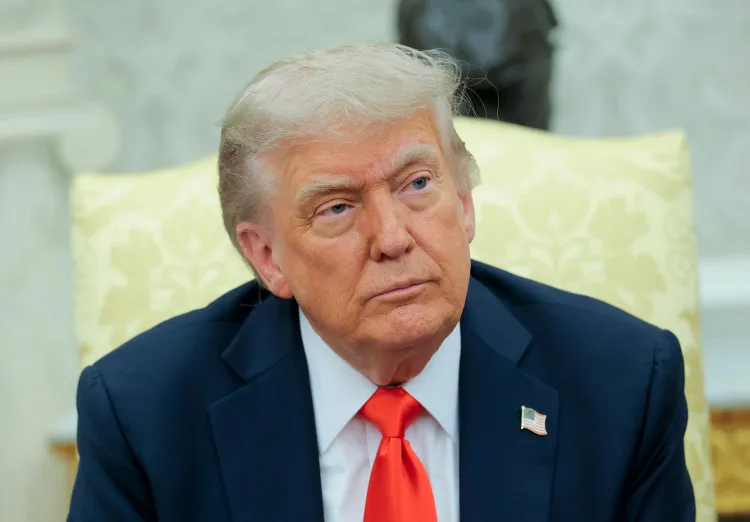

WASHINGTON — President Donald Trump announced Monday that U.S. military operations in Iran are projected to last at least four to five weeks, though he signaled a willingness to extend the campaign indefinitely to achieve total victory. Speaking during a Medal of Honor ceremony at the White House, the President provided his first formal update since the launch of Operation Epic Fury, a joint U.S.-Israeli offensive that has already fundamentally reshaped the Middle East landscape.
“We’re already substantially ahead of our time projections, but whatever the time is, it’s okay,” Trump stated. “From the beginning, we projected four to five weeks, but we have the capability to go far longer than that. Whatever it takes.”
Leadership Decapitation and the “Immunity” Offer
The operation, which began with a massive wave of strikes overnight Saturday, achieved an unprecedented tactical milestone: the confirmed death of Iranian Supreme Leader Ayatollah Ali Khamenei. Alongside Khamenei, U.S. officials report that more than 40 high-ranking Iranian officials were killed in the initial barrage.
In an effort to accelerate a regime collapse, Trump utilized social media and official channels to offer a conditional olive branch to Iran’s rank-and-file security forces.
- The Offer: Full immunity for members of the Revolutionary Guard (IRGC) and military police who lay down their arms.
- The Ultimatum: Those who continue to resist will face “certain death.”
The President claimed on Monday that thousands of Iranian officials have already begun reaching out to U.S. intermediaries to discuss terms of surrender, though these claims remain difficult to verify independently.
Regional Escalation: Gulf States Under Fire
While the White House remains optimistic about the timeline, the conflict is rapidly expanding beyond Iran’s borders. Tehran has launched aggressive retaliatory strikes targeting not only Israel but also Gulf states hosting U.S. military assets.
Confirmed impacts and tensions have been reported in:
- The United Arab Emirates and Kuwait: Both nations have intercepted multiple incoming projectiles, though some debris has caused local damage.
- Bahrain: U.S. Central Command confirmed that the Navy’s Fifth Fleet headquarters was a primary target for Iranian missiles.
- Saudi Arabia and Qatar: Both kingdoms remain on high alert as the U.S. provides enhanced missile defense support.
The Strait of Hormuz remains a flashpoint of global concern. Reports indicate that at least 10 Iranian warships have been sunk, but the threat of maritime mining and “swarm” drone attacks continues to rattle global energy markets.
The Rising Human Cost
The human toll of the five-day conflict is mounting. U.S. Central Command confirmed on Monday that the American death toll has risen to six service members, with at least 18 others seriously wounded.
Inside Iran, the situation is increasingly dire. The Iranian Red Crescent Society reports that over 800 people have been killed since Saturday, including significant civilian casualties in Tehran and Kerman. Despite the carnage, the Trump administration maintains that the strikes are “precisely calibrated” to destroy nuclear infrastructure and command-and-control hubs while minimizing non-combatant harm.
A Look Ahead: Regime Change or Stalemate?
As the U.S. enters the second week of operations, the focus is shifting toward what comes after the “decapitation” of the current leadership. While Vice President JD Vance has insisted the U.S. will not be drawn into a “multiyear conflict,” the lack of a clear successor to Khamenei has created a power vacuum.
Global leaders, including French President Emmanuel Macron, have voiced concerns that the strikes may have been conducted “outside international law,” even as they acknowledge the threat posed by Iran’s nuclear ambitions. The coming weeks will determine if Trump’s “four to five week” window is a realistic strategic goal or the beginning of a prolonged regional transformation.