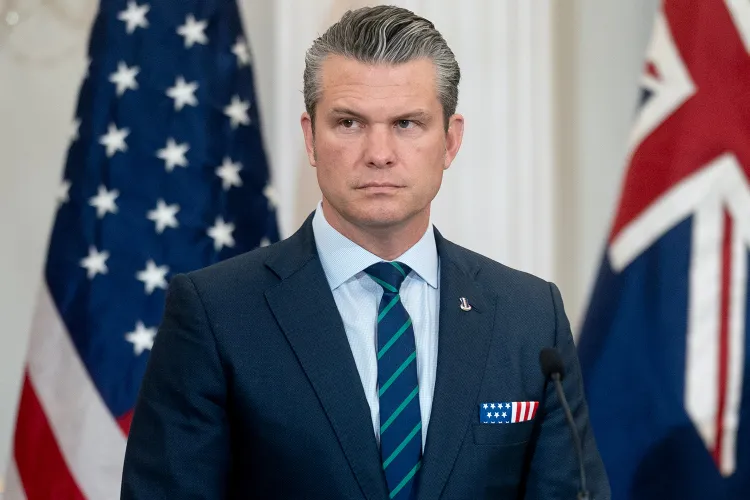

President Trump and Defense Secretary Pete Hegseth are navigating a precarious tactical landscape as they weigh military options to reopen the Strait of Hormuz, a vital maritime artery currently under siege by Iranian forces.
Following heavy U.S. strikes on Kharg Island—Iran’s primary oil export hub—the administration remains locked in a strategic dilemma: how to secure global energy supplies without triggering a full-scale ground war or incurring heavy American casualties.
The Tactical Challenge: Mines and Asymmetric Threats
The primary obstacle to merchant transit is Iran’s vast arsenal of naval mines, estimated by the Defense Intelligence Agency to exceed 5,000 units. These range from legacy contact mines to sophisticated “bottom influence” explosives that detonate based on magnetic signatures.
“It’s hard, it’s messy, you’ve got to sort one mine at a time,” noted Steven Wills, a navalist for the Center for Maritime Strategy. While the U.S. maintains unmanned and helicopter-based mine-hunting systems, the absence of retired specialized assets like the MH-53 Pave Low complicates rapid clearance.
Furthermore, the threat of “kamikaze” drones remains a potent asymmetric risk. Erik Bethel, a U.S. Naval Academy graduate and partner at Mare Liberum, warned that even a multi-billion-dollar carrier strike group is vulnerable to low-cost aerial and surface drones. “We’re shooting down $50,000 drones with multimillion-dollar missiles,” Bethel told reporters, highlighting the economic and tactical imbalance of the conflict.
Strategic Options on the Table
The Pentagon is currently moving approximately 2,500 Marines and three warships to the region. Military analysts suggest three primary courses of action:
- Island Seizures: Establishing “expeditionary bases” on Iranian-adjacent islands to neutralize shoreline threats.
- Naval Escorts: Utilizing the Navy to ferry tankers through the 21-mile-wide passage, though this requires prior mine neutralization.
- Targeted Occupation: Capturing Kharg Island to gain leverage over 90% of Iran’s oil shipments.
Political and Human Risks
The stakes are historically high. With 13 U.S. service members already killed in the ongoing conflict, any escalation toward ground operations remains politically volatile. Conversely, a negotiated end to the blockade could leave the Iranian regime’s nuclear infrastructure intact—a scenario that contradicts the President’s stated victory conditions.
Joint Chiefs of Staff Chair Dan Caine confirmed Friday that the military is prioritizing “counter-mining” efforts before commencing full-scale escort missions. While Secretary Hegseth downplayed immediate concerns, stating the Pentagon “has been dealing with it,” the global economy remains on edge as the Strait facilitates 20% of the world’s oil trade.
When asked about the timeline for a resolution, President Trump remained characteristically intuitive: “When I feel it in my bones.”