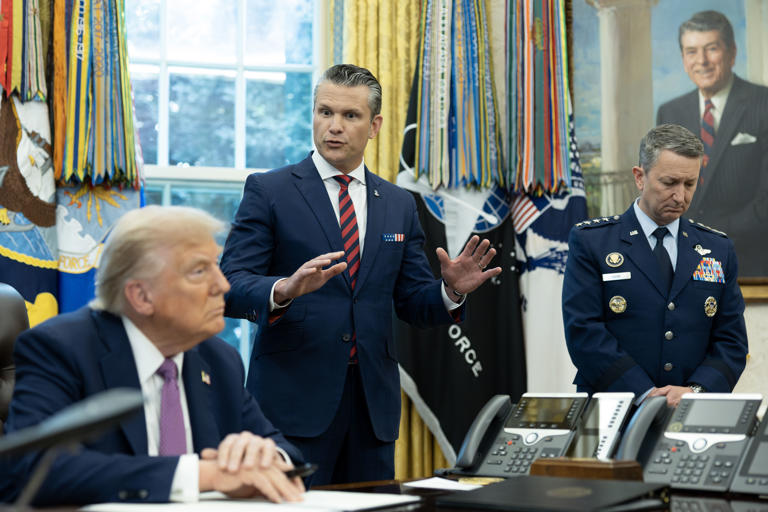

President Donald Trump and senior White House advisers began pushing for lethal strikes on Western Hemisphere drug traffickers almost immediately after taking office in January. Over the past 10 months, they have repeatedly overridden or bypassed government lawyers who questioned whether the policy was legal, according to multiple current and former officials familiar with the internal debates.
The push comes as Trump considers what some officials describe as potentially imminent military action against Venezuela and its leader, Nicolás Maduro, while U.S. forces continue attacking alleged drug-smuggling boats in the Caribbean Sea and eastern Pacific Ocean. New details show how an aggressive counter-narcotics strategy—one that relies on unprecedented U.S. military force—took shape, along with significant legal concerns raised by critics.
The boat strikes are being executed by the Pentagon. At Trump’s direction, the U.S. has surged warships, aircraft, and troops into the region, including the nation’s largest aircraft carrier.
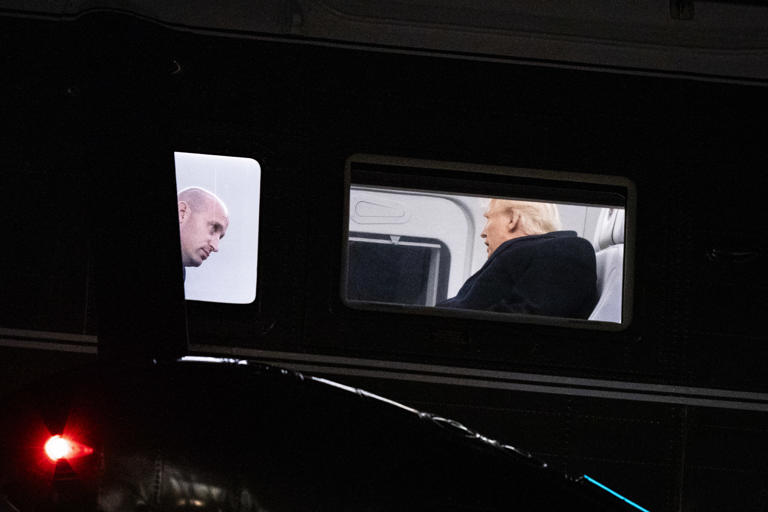
Early on, however, the administration explored a different route: using the CIA’s covert authorities to carry out the lethal attacks Trump and Stephen Miller, his influential homeland security adviser, wanted, according to two people familiar with the matter.
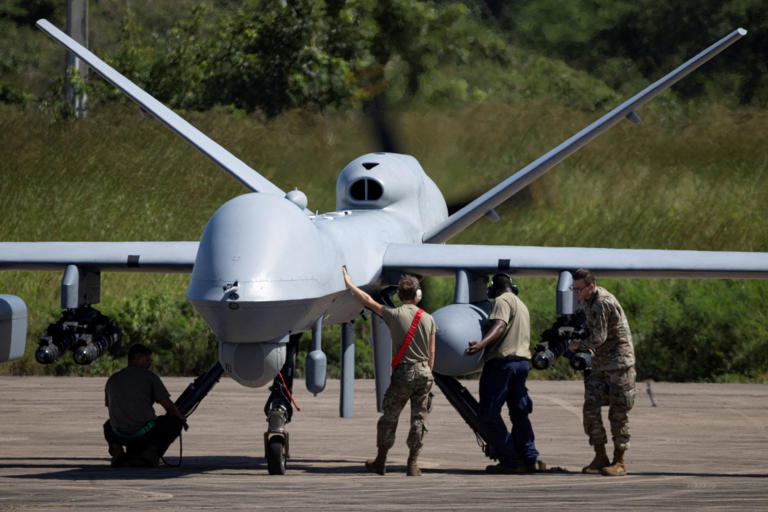
Under Director John Ratcliffe, the CIA was rapidly expanding its counternarcotics mission and explicitly modeling it on the post-9/11 campaign against terrorist networks. White House officials proposed that the CIA take the lead, and staff began drafting a presidential authorization for covert action—known as a “finding.”
Agency and government lawyers pushed back sharply. They questioned whether killing civilian drug traffickers was defensible under domestic law if the cartels were not directly planning attacks on Americans, even if their drugs were contributing to deaths in the U.S. They also asked whether lethal action was lawful against people whose identities were unknown and who appeared to be low-level operators.
“There is no actual threat justifying self defense — there are not organized armed groups seeking to kill Americans,” said one person familiar with the legal debate, speaking anonymously because of the sensitivity of the matter.
Even the secrecy normally associated with covert action was a problem for Miller’s team, according to one person familiar with the planning. They wanted any strikes against what Trump has labeled “narcoterrorists” to be publicly highlighted, including with footage of drug labs or boats being destroyed.
By late spring, as CIA lawyers continued objecting, the administration shifted to a path already under consideration: putting the military in charge. In doing so, it adopted a legal theory that many national security law experts say doesn’t match the facts—that the U.S. is engaged in a “non-international” armed conflict with “designated terrorist organizations” tied to the narcotics trade.
This account is based on interviews with nearly 20 current and former officials and others familiar with the discussions.
“President Trump is prepared to use every element of American power to stop drugs from flooding in to our country and to bring those responsible to justice,” a senior administration official said in an email responding to questions from The Washington Post, adding that operations received careful legal review and were deemed lawful.
By midsummer, officials were weighing both continued boat strikes and more aggressive Venezuela-focused options—including seizing oil fields and a possible “snatch and grab” of Maduro—according to a former official.
“President Trump has been clear in his message to Maduro: Stop sending drugs and criminals to our country,” said the senior administration official, who spoke anonymously due to the sensitivity of internal deliberations.
The CIA declined to comment on the covert-action discussions.
Speeding past legal guardrails
By late spring and early summer, the White House was juggling multiple priorities, including planning an operation to bomb Iran’s nuclear facilities and mediating a Gaza peace deal. Some officials thought the appetite for cartel strikes might be fading. But Miller and other advisers stayed focused on crushing the cartels—and a personnel shake-up reduced legal resistance.
Many career lawyers and national security officials at the National Security Council, Pentagon, and Justice Department who had raised concerns about lethal counter-drug operations either left, were reassigned, or were removed, several former officials said.

Covert-action findings are typically vetted by lawyers across the CIA, the Office of the Director of National Intelligence, and the Justice, State, and Defense departments, followed by an interagency legal review overseen by the NSC’s legal adviser.
By summer, however, the NSC’s full-time legal team—about half a dozen lawyers—was gone. Some departed when temporary assignments ended; others were dismissed in a May reorganization, including the NSC’s top lawyer, former Pentagon general counsel Paul Ney, three former officials said. Ney had been among those warning that lethal cartel strikes could be unlawful.
A senior administration official said Ney’s departure reflected a restructuring of the NSC legal system, which the official described as inefficient. The official added that the White House Counsel’s Office now handles NSC legal work and that, overall, more lawyers are involved than before.
Outside experts say the loss of independent NSC legal oversight is consequential. Carrie Cordero, a former national security lawyer in the George W. Bush and Obama administrations and now a senior fellow at the Center for a New American Security, said the vacancy leaves senior officials without seasoned national security legal counsel at the table.
At the Defense Department, political leadership also largely cut career civilian lawyers out of the cartel-strike planning.
Over the summer, the Justice Department’s Office of Legal Counsel produced a classified memo laying out a legal foundation for the strikes. People familiar with it say the opinion argues that the U.S. is in an armed conflict with “narcoterrorists,” and that lethal force serves critical national interests without rising to a constitutionally defined “war” requiring congressional approval.
The senior administration official said the memo reflected agreement by a small interagency lawyers group consisting of four career attorneys (including two uniformed military lawyers) and four political appointees. The group unanimously concluded the strikes were legally available to the president, the official said.
The Defense Department declined to answer questions about its internal legal debates. Pentagon spokesman Sean Parnell said in a statement that no Pentagon lawyers with knowledge of the operations have raised legality concerns through formal channels and that the strikes comply with U.S. and international law.
In August, the administration conveyed to military officials that it considered the U.S. to be in an armed conflict with drug cartels, according to people familiar with the matter.
Soon afterward, in early September, U.S. special operators struck an alleged drug boat that Trump claimed was carrying “Tren de Aragua Narcoterrorists … operating under the control of Nicolás Maduro.” Two relatives of the 11 people killed acknowledged the group had been transporting marijuana and cocaine from Venezuela to Trinidad but denied ties to Tren de Aragua. U.S. intelligence agencies have assessed that the Venezuelan government does not direct the gang.
Two days later, on Sept. 4, Trump formally notified Congress of the strike.
Getting the CIA on board
At the end of September, Ratcliffe appointed CIA Deputy Director Michael Ellis as acting general counsel—an unusual dual role—until a permanent general counsel, Josh Simmons, is confirmed. The confirmation is expected early next month.
Ellis, a former NSC lawyer and intelligence aide during Trump’s first term, replaced a career CIA lawyer who had been serving as acting general counsel and who had raised questions about the legality of lethal counternarcotics operations, according to people familiar with the matter.
After taking the role, Ellis backed a proposed finding authorizing covert CIA operations against cartel targets, two people said.
Asked about Ellis’s appointment, CIA spokeswoman Liz Lyons said Ratcliffe selected him because of his standing as a national security lawyer.
Former intelligence officials said that while Ellis’s and Ratcliffe’s approval was not legally required, it would have been highly unlikely for Trump to sign a finding without top-level CIA support.
In October, Trump publicly acknowledged authorizing covert CIA action—an extraordinary step, since such missions are ordinarily meant to remain secret and deniable.
‘Is it legal just to kill the guy?’
Inside the CIA, some operational personnel worry about a repeat of past covert programs that produced legal and political blowback, such as the Iran-contra scandal and post-9/11 rendition and interrogation operations, three former officials said.
“The question is, is it legal just to kill the guy if he’s not threatening to kill you and you’re outside an armed conflict?” said a former senior official familiar with the debate. “There are people who are simply uncomfortable with the president just declaring we’re at war with drug traffickers.”
Another concern is target legitimacy. A former official said there is little evidence that the small boats being struck qualify as lawful operational targets, noting that earlier counterterrorism campaigns applied higher thresholds when dealing with low-level couriers.
Nervousness has spread through the CIA’s Americas and Counternarcotics Mission Center, according to current and former officials. One former official said the office mood is fraught: “We don’t even know if what we’re doing is legal.”
A mission center lawyer who questioned lethal force was reassigned and replaced, people familiar with the matter said, though the reason for the move remains unclear.
The agency has also increased staffing in the mission center, reassigning more than two dozen analysts from other regions, including Europe and Eurasia and counterproliferation, another person said.
Some former officials counter that the OLC opinion provides legal cover. “There’s no evidence of illegality — just a lot of hand-wringing from people who don’t want to do the mission or are nervous about it,” one former official said.
Still, anxiety is rising within the military as well. Troops have reportedly struggled with the administration’s argument that alleged traffickers meet the same legal threshold as terrorist groups such as the Islamic State.
In recent weeks, junior military officers concerned about personal legal exposure asked judge advocates general for written legal sign-off before participating in strikes, two people familiar with the matter said. It does not appear such written assurances were provided.
Some personnel worry they may need personal legal representation later, particularly if a future administration or Congress reviews the operation.
In the past week, some career Pentagon lawyers have been brought into strike discussions and are again raising concerns about the legality of lethal force, people familiar with the matter said.
On Tuesday, six Democratic lawmakers who previously served in the military or intelligence community released a video urging service members and intelligence professionals to refuse unlawful orders. The clip went viral.
Trump responded on Truth Social on Thursday, calling the lawmakers’ comments “dangerous to our country.” About an hour later, he posted again, accusing them of “SEDITIOUS BEHAVIOR, punishable by DEATH!”