
WASHINGTON — House Democrats leveled explosive accusations of a White House-directed “cover-up” Thursday, following revelations that the Department of Justice (DOJ) omitted dozens of pages of FBI interview summaries concerning sexual assault allegations against President Donald Trump from the publicly released Epstein files.
The growing outcry, led by Rep. Robert Garcia (D-Calif.), includes formal demands for the President to testify before the House Oversight Committee. The controversy centers on missing documentation from a series of 2019 FBI interviews with a survivor who alleged she was assaulted by both Jeffrey Epstein and Trump in the 1980s while she was a minor.
Missing Evidence Sparks Integrity Crisis
The dispute involves at least 53 pages of investigatory materials that appear to have been excised from the 3 million documents released by the DOJ between December 2024 and January 2025.
According to internal FBI indices corroborated by The New York Times and NPR, the bureau conducted four interviews with the accuser between July and October 2019. However, the public record currently contains notes from only one of those sessions—an interview that details accusations against Epstein but conspicuously omits any mention of the President.
“I have personally reviewed the unredacted files at Justice Department headquarters,” Rep. Garcia stated during a Thursday press conference. “I can confirm the DOJ appears to have illegally withheld FBI interviews with this survivor who accused President Trump of heinous crimes. This is a White House cover-up in plain sight.”
Timeline of the Allegations
The allegations, which first surfaced in an internal FBI report compiled last summer, detail a series of assaults occurring between 1983 and 1985. The victim, who was between 13 and 15 years old at the time, alleged that Epstein introduced her to Trump.
| Key Detail | Description |
|---|---|
| Nature of Allegation | Forced sexual acts and physical assault. |
| The “Missing” Gap | 53 pages across three separate FBI interview summaries. |
| Discovery Method | Discrepancies in serial numbers and FBI indices in the “Epstein Files.” |
| DOJ Defense | Documents withheld due to “privilege” or “ongoing investigations.” |
The victim reportedly told investigators that Trump attempted to force her to perform oral sex and struck her when she resisted. While the victim joined a lawsuit against the Epstein estate in 2019, she dropped the claim in 2021 for reasons that remain unclear.
DOJ and White House Response
The Justice Department, now under the leadership of Attorney General Pam Bondi, has denied any political interference. In a statement released Wednesday, a DOJ spokesperson maintained that all responsive documents have been produced unless they fall under specific legal exemptions, such as:
- Duplicate filings.
- Legally privileged material.
- Information pertinent to an ongoing federal investigation.
The latter category has fueled speculation that a quiet inquiry into the President’s past conduct may still be technically active, or that the “ongoing investigation” designation is being used as a shield to prevent politically damaging disclosures.
Political Fallout and the “Inverted Pyramid” of Pressure
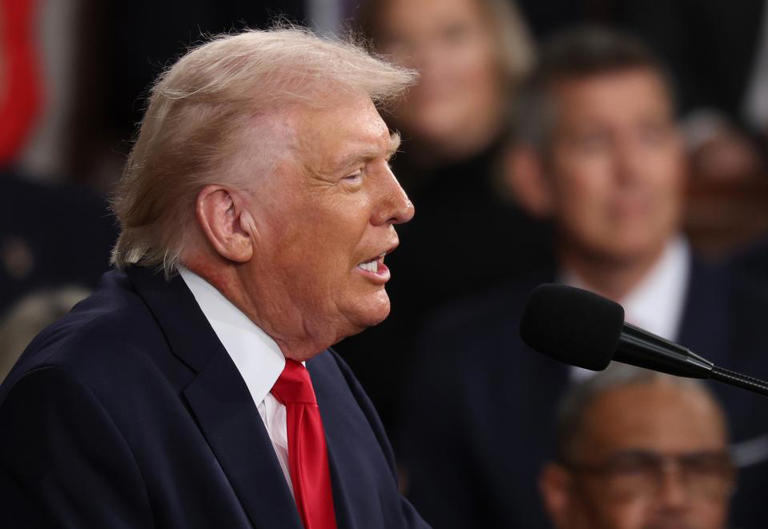
The timing of these revelations is particularly sensitive for the administration. President Trump, who recently delivered a State of the Union address focused on national unity, has largely dismissed the Epstein controversy as a partisan “overreaction.” When asked about the recent arrest of Andrew Mountbatten-Windsor in connection to the Epstein case, the President called the situation “very sad,” a tone critics describe as uncharacteristically sympathetic.
In a formal letter to Attorney General Bondi, Rep. Garcia demanded the DOJ “specify the exact grounds” for withholding the interviews and provide a status update on any investigations into the President.
What’s Next
The House Oversight Committee is expected to vote on a subpoena for the missing 53 pages as early as next week. If the DOJ continues to cite “ongoing investigations” as the reason for the redactions, it could force a constitutional showdown over executive privilege and the public’s right to transparency under the Epstein Files Transparency Act.
As the “slow drip” of revelations continues, legal experts suggest the focus will shift to the FBI agents who conducted the 2019 interviews, as Democrats weigh calling them to testify about the discrepancies between their original notes and the files released to the public.