
CARDIFF, Wales — A freak accident aboard a commuter train has led to a life-altering medical discovery for a 29-year-old woman, transforming a celebratory journey into a fight against a rare, incurable brain tumor.
Lauren Macpherson was returning home from a music festival when a 35-pound suitcase fell from an overhead storage rack, striking her on the head. While the incident initially appeared to be a standard personal injury, a retaliatory CT scan at a local hospital revealed a “shadow” on her brain—uncovering a terminal malignancy that had previously gone undetected.
:max_bytes(150000):strip_icc():focal(379x507:381x509):format(webp)/Lauren-Macpherson-2-031826-e5e58fb96a764fc69589232949f5405c.jpg)
A Hidden Crisis Revealed
Prior to the accident, Macpherson reported experiencing chronic fatigue, gastrointestinal issues, and blackouts for over a year. Medical professionals had previously attributed these symptoms to hormonal imbalances or undiagnosed ADHD.
“There is an instinct inside you,” Macpherson stated, noting that the diagnosis provided a grim sense of clarity. “It’s almost like a relief… you think you’re going crazy with all these things going wrong.”
Following the initial discovery, doctors diagnosed Macpherson with a grade two oligodendroglioma, a rare and incurable form of brain cancer. While initial estimates suggested a 10-to-12-year life expectancy, further assessments indicated the potential for a more aggressive glioblastoma, which could reduce that timeline to just two years.
:max_bytes(150000):strip_icc():focal(745x531:747x533):format(webp)/Lauren-Macpherson-brain-scan-031826-7a5569f2b9204d8da13e79371df052fb.jpg)
Surgical Complications and Treatment Barriers
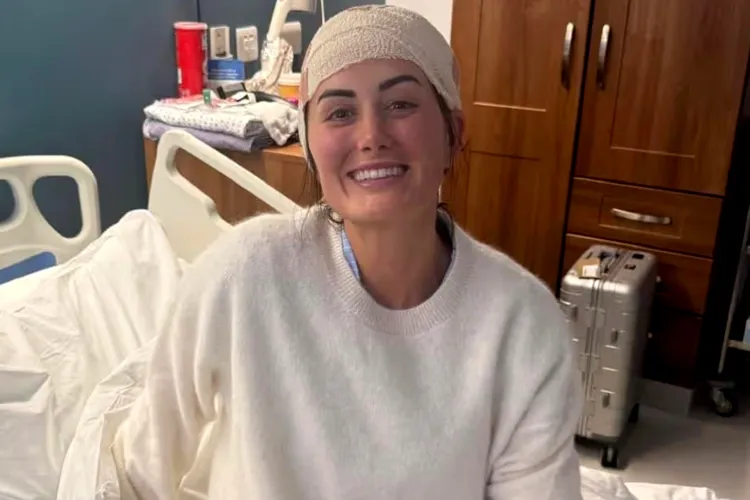
In October 2025, Macpherson underwent private surgery to remove the mass. While surgeons successfully excised approximately 80% of the tumor, the procedure’s location within the speech cortex resulted in significant cognitive and linguistic setbacks.
“It was almost like somebody had given me a new brain,” Macpherson said regarding her post-operative recovery. “Nothing made sense; I didn’t feel like me.”
The case has also highlighted regional disparities in healthcare access. Macpherson is currently seeking vorasidenib, a targeted treatment shown to slow cancer progression. While the drug is approved for use by NHS Scotland, it remains unavailable through public health sectors in Wales, England, and Northern Ireland. The Welsh government defended the restriction, citing a lack of clear evidence that the drug extends overall lifespan, despite its ability to delay progression.
:max_bytes(150000):strip_icc():focal(783x397:785x399):format(webp)/Lauren-Macpherson-Zach-2-031826-eef0d8935544488a8d84027ac82f6c18.jpg)
The Path Forward
Macpherson now undergoes diagnostic scans every three months to monitor tumor stability and plans to pursue vorasidenib through a private provider. As she navigates the emotional and physical toll of the diagnosis, she remains vocal about the impact on her family.
:max_bytes(150000):strip_icc():focal(1080x861:1082x863):format(webp)/Lauren-Macpherson-hospital-031826-6fd21350ac5b4ee8b1927c2071370185.jpg)
“I think everyone always says ‘I wish it was me, not you,'” Macpherson reflected. “I could really see it with them… the pain in their eyes.”