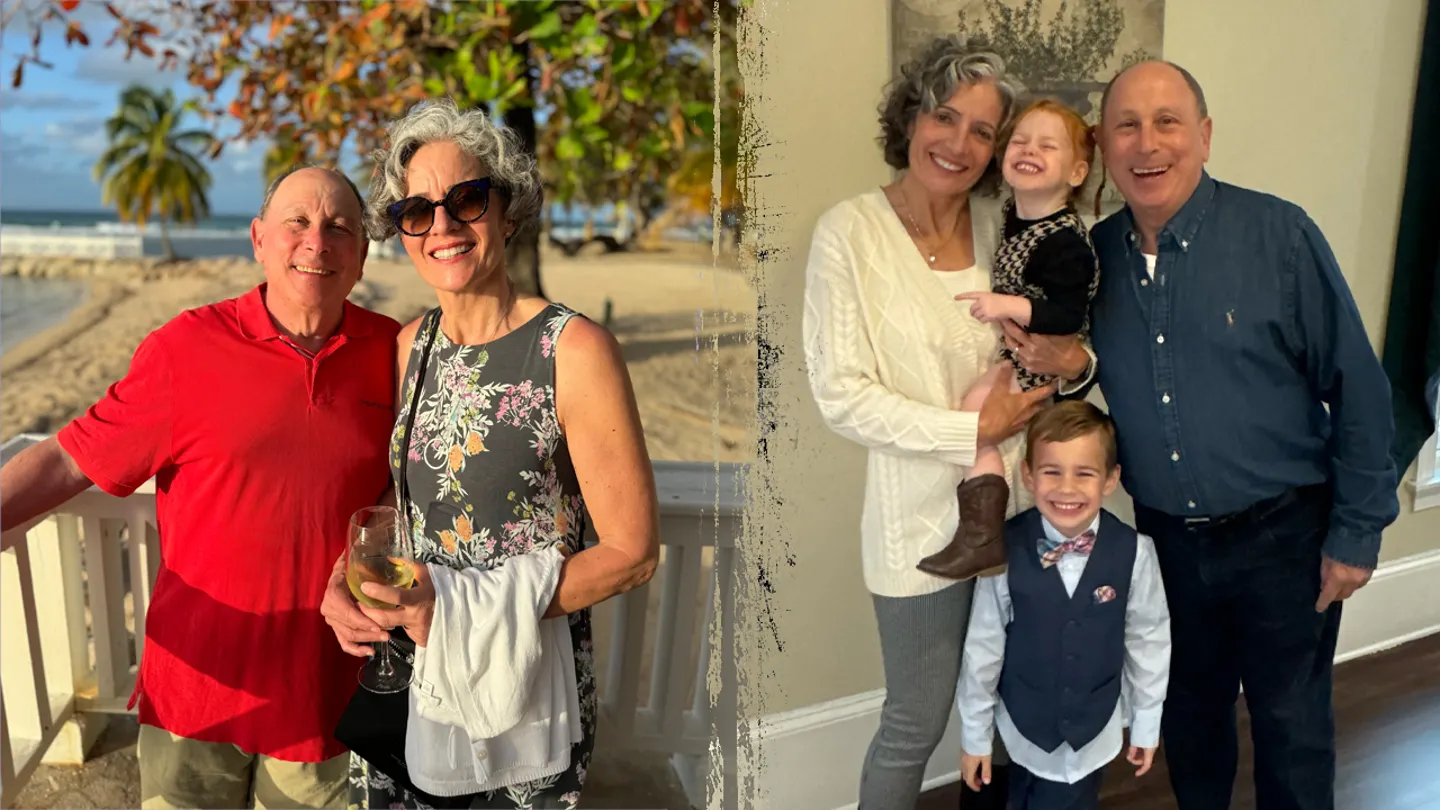

A New Jersey woman has been given a second chance at life thanks to an innovative cancer therapy.
Pamela Goldberger, 65, was diagnosed in 2023 with glioblastoma — a devastating brain cancer with an average survival time of just 14 to 16 months, even with surgery.
In an interview with Fox News Digital, Goldberger described how her initial symptoms were subtle, aside from intense nausea — until one evening at dinner when she accidentally used her fork as a knife and vice versa.
Goldberger sought emergency neurological testing, including MRIs and a CAT scan, which revealed a brain tumor.
“It’s pretty devastating news to hear,” she said. “I don’t know what I thought was happening, but that wasn’t it … Our world just stopped.”
She added, “We have two little grandchildren, and I thought I was never going to have the opportunity to see them grow up. I think that’s as devastating as it gets.”
After being admitted to the hospital, Goldberger was scheduled for brain surgery.
While surgery is the standard treatment for this aggressive cancer, the head of neurosurgery at Cooper University Hospital in Camden, New Jersey, offered Goldberger a different option — an opportunity to join a clinical trial for an individualized dendritic cell therapy designed to combat glioblastoma. She agreed to participate.
Following surgery, Goldberger underwent six weeks of chemotherapy and radiation, then started six weeks of the investigational cell therapy a few weeks later, followed by a year of maintenance chemotherapy.
Though the recovery was “very gradual,” Goldberger said she began to feel like herself again once the oral chemotherapy concluded.
Now, 2½ years after her diagnosis, she is healthy and enjoys playing tennis several times a week.
According to Dr. Joseph Georges, a neurosurgeon at Banner University Hospital in Phoenix, Arizona, who led the clinical trial, survival rates and treatment options for glioblastoma have remained largely unchanged for 20 years.
“It’s a highly mutated tumor and there are different cell populations for each patient,” Georges told Fox News Digital. “And the tumor is also very good at silencing the body’s immune system from attacking it.”
The new treatment works by priming the immune system to detect and kill tumor cells. A vaccine is created from the patient’s own tumor, collected during surgery.
“We’re picking up all these various tumor cell types, and then we’re teaching the immune system how to attack the tumor — even the small cells that evade surgical resection,” Georges explained.
The treatment, known as DOC1021 (dubondencel), uses dendritic cells taken from patients. It was administered to 16 individuals aged 47 to 73, all newly diagnosed with glioblastoma, including Goldberger.
After chemo and radiation, patients received three injections of the therapy every two weeks, alongside weekly injections of a pegylated interferon medication to help regulate the immune system.
Goldberger continues regular check-ins with her doctors and reports feeling well. She enjoys spending time with her grandchildren, playing tennis, dining with friends, reading, shopping, and traveling.
According to a press release from Diakonos Oncology, the company behind DOC1021, the phase 1 clinical trial showed positive immune responses and improved survival rates. The treatment was also found to be safe, with minimal side effects, even at high doses.
“At best, we hope to keep it stable and hope that we don’t see it grow, but we are actually seeing tumors disappear for some of these people on their MRIs,” Georges told Fox News Digital, calling the results “something you don’t see in glioblastoma.”
“It’s truly amazing.”
Goldberger says she’s “living my best life right now” and is no longer limited by her diagnosis.
She encourages other glioblastoma patients to explore clinical trial options if available and emphasizes the importance of committing to their healing process.
“I was a really good patient. I did everything my doctors told me to do,” she said. She made sure to walk daily, eat well, get plenty of rest, and surround herself with things and people that brought happiness.
“I think all those things, put together with having excellent medical care and this trial, is the reason [I’m alive]. And a lot of luck.”
Dr. Georges agreed, noting that patients with recurring glioblastoma should seek clinical trials that may provide new hope.
On July 22, Diakonos Oncology announced the first patient was dosed in the phase 2 clinical trial of DOC1021, which will be available at 20 sites nationwide.