
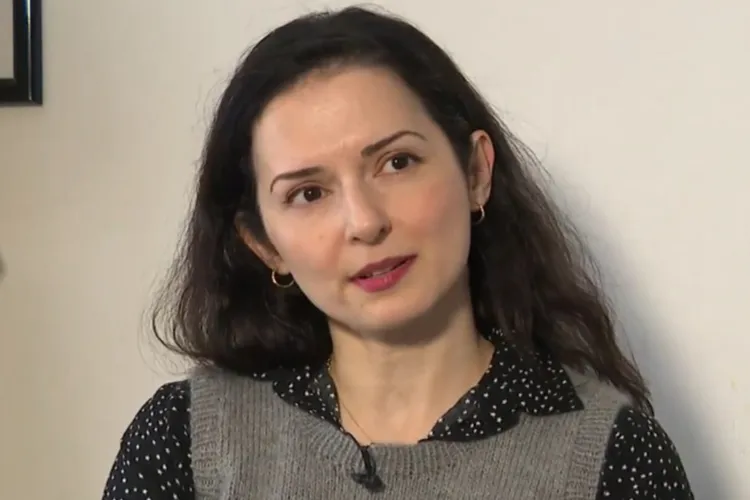

What should have been a joyful stretch of pregnancy became a terrifying turning point for Salimeh Maghsoudlou.
Maghsoudlou told the Canadian Cancer Society (CCS) and CBC News that she was 35 and seven months pregnant with her first child in 2019 when she noticed an unusual lump in her breast. At her next appointment, she flagged it to her doctor. An ultrasound followed, then a biopsy — and the diagnosis: HER2-positive, hormone-negative breast cancer.
“Obviously, there was an element of shock,” Maghsoudlou recalled to the CCS. “I didn’t feel any pain. There were no other symptoms besides the lump. It’s like the mind doesn’t believe that you are sick. But my immediate reaction was: ‘What do we do next?’”
She said she quickly realized how little clear guidance was available for navigating cancer treatment during pregnancy. Eventually, she switched hospitals to work with a medical team more familiar with rare cases like hers. That team put her on a treatment plan that included two rounds of chemotherapy before her baby was born.
“I did lots of independent research on specific chemotherapy drugs and the safety for my child, but the information was difficult to find,” she noted to CCS. “It was hard to find any precise information on specific drugs used during pregnancy.”
After her son was born, Maghsoudlou underwent surgery for a segmental mastectomy — which removes a breast tumor along with a surrounding margin of healthy tissue, per the National Cancer Institute — followed by 19 rounds of radiotherapy, according to the CCS.
:max_bytes(150000):strip_icc():focal(740x458:742x460):format(webp)/mammogram-020526-1-d21f154cd9b2467d8920bf35f0af1745.jpg)
Since completing treatment, Maghsoudlou has focused her energy on prevention and earlier detection. She has been advocating for routine breast examinations as part of prenatal care in Quebec, Canada, which has the highest cancer incidence rate in the country for both men and women, per the CCS.
“In other countries, breast exams [are] part of gynecological follow-ups,” she told CBC News. “Here, that wasn’t the case. If my obstetrician had done a breast examination, maybe they could have found it earlier.”
:max_bytes(150000):strip_icc():focal(749x0:751x2):format(webp)/pregnant-belly-020526-1-7d176452251041bb96185c71f6e68d35.jpg)
Maghsoudlou is cancer-free as of 2025. Still, she told CBC News that the experience left lasting emotional scars, even as she remains grateful that both she and her son are healthy.
“It’s not something that you forget,” she said. “The fear of mortality still pokes up.”
There is a 1 in 8 chance that a woman will develop breast cancer, according to the American Cancer Society. In the U.S., it is estimated that over 320,000 cases of invasive breast cancer will be diagnosed in women and that over 42,000 women will die from breast cancer in 2026.


