
What began as a quiet summer night in rural Texas quickly turned into a frightening medical ordeal for Sarah Neal, who was left with a painful, spreading rash and facial swelling that stumped emergency room doctors and left her feeling like “a medical mystery.”
Neal, 28, says she was asleep when she felt something crawling on her. “I grabbed it and threw it,” she recalls. “It bit me on my left butt cheek — I didn’t think much of it at the time.”
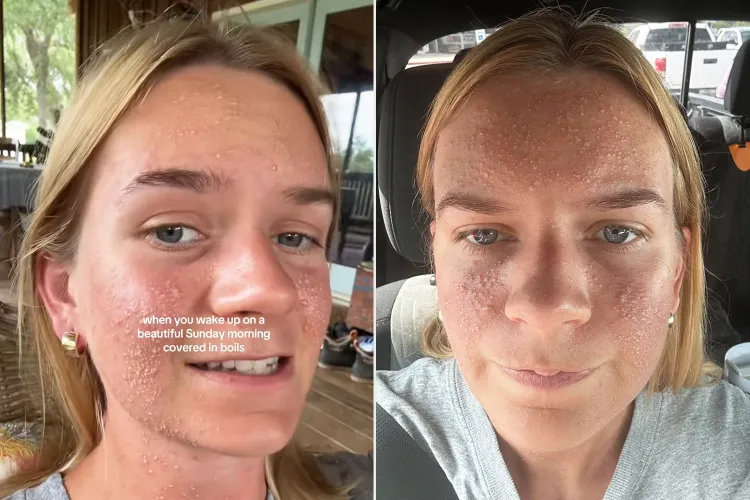
But within hours, her skin began reacting. By the next night, her arms and legs were covered in a rash, her face turned bright red and hot to the touch, and she spiked a fever. “It felt like a really bad sunburn,” Neal says. “Everything was burning and tight.”
By morning, her face was puffy, covered in pustules, and her symptoms were only getting worse. Neal rushed to the ER — but the visit brought more confusion than relief.
“They dismissed the bite,” she says. “The doctors guessed it was a reaction to sunscreen or skincare. I was prescribed steroids and antibiotics and sent home. I left feeling ignored and dismissed.”
:max_bytes(150000):strip_icc():focal(627x444:629x446):format(webp)/woman-gets-rash-from-spider-bite-072325-3-b260a1c904094439ab7fa79a315d67b5.jpg)
Back home, her concerned mother pushed her to seek a second opinion. That same day, Neal was able to see a dermatologist — a rarity, she notes, made possible by help from TikTok followers after she posted about her condition online.
The dermatologist took one look at her skin and delivered a surprising answer: it was AGEP, or acute generalized exanthematous pustulosis, a rare, fast-moving rash usually caused by medications. But in Sarah’s case, it had a different trigger — a brown recluse spider bite.
“The doctor said he’d only seen it from antibiotics — but there were a few very rare cases caused by spider bites,” she explains. “He told me if the rash improved with steroids, that would confirm it. And that’s exactly what happened.”
Within days, the rash began to fade, but the bite itself worsened. “The area turned black and hard,” she says. “The tissue was necrotic — literally dying.”
A second dermatologist confirmed the same rare diagnosis and warned her against traveling, as the necrosis continued to spread. “I was supposed to go to Montana and nearly canceled the trip,” Neal says. “But I went back to the ER, got cleared, and thankfully, the wound started healing on its own.”
Still, recovery was slow and painful. “I couldn’t sit for two weeks,” she says. “Even lying in bed hurt.” After weeks of rest and treatment, the rash disappeared, and the only physical reminder left is a small scar — which she says she may eventually tattoo with a little spider “just for the memories.”
Neal’s experience caught the attention of thousands on TikTok, where she shared updates and photos throughout her recovery. Many commenters offered advice — some helpful, others less so — but most simply offered support. “It was overwhelming, in a good way,” she says. “People kept checking on me.”
She’s also grateful that sharing her story may help others. “Doctors need to be aware that rare reactions exist,” she says. “If I hadn’t pushed for a second opinion, I wouldn’t have known what really happened.”
Her message is clear: trust your gut, and don’t let your concerns be dismissed. “Especially as women, we’re often told we’re exaggerating,” Neal says. “But I knew something was wrong. I listened to my body — and it may have saved my life.”