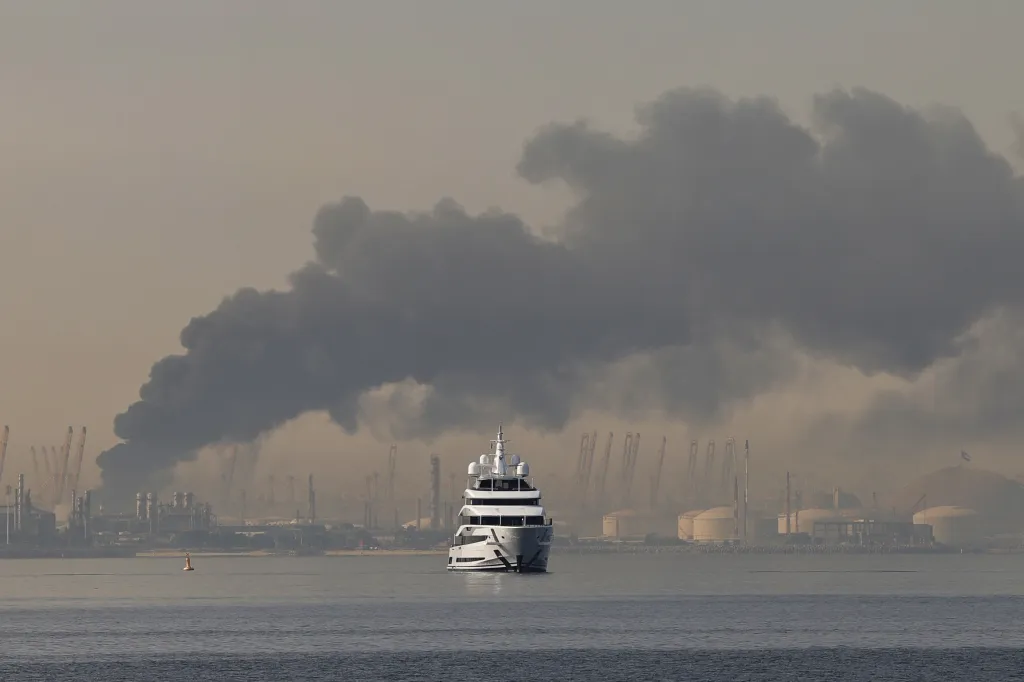

DUBAI, UAE — A series of unprecedented Iranian missile and drone strikes targeting the United Arab Emirates and its neighbors has shattered the region’s long-standing image as a “safe haven,” sending shockwaves through global markets and halting critical trade operations. The attacks, which struck high-profile luxury landmarks and the world’s most vital shipping ports on Monday, represent a sharp escalation in Tehran’s response to ongoing U.S.-led military operations.
Escalation in the Persian Gulf: A Strategy of Economic Pain
The Iranian offensive has pivoted from military targets to the economic heart of the Middle East. By targeting the United Arab Emirates, Qatar, and Kuwait, Tehran appears to be leveraging the region’s role as a global financial and logistics hub to pressure the Trump administration into a ceasefire.
The strikes have hit the core of Dubai’s identity: its status as an untouchable oasis for the global elite. For decades, the UAE has diversified its economy away from oil, successfully attracting billions in foreign investment, but that very interconnectedness now poses a systemic risk to the global economy.
Key Impact Zones and Infrastructure Damage
The scale of the disruption is visible across the UAE’s most iconic infrastructure:
Jebel Ali Port: DP World has officially suspended operations at the Middle East’s largest container port. A fire broke out at a critical berth following the interception of an Iranian missile, freezing a facility that contributes roughly 36% of Dubai’s GDP.
Aviation Hubs: Airspace across the Gulf has been restricted or closed, paralyzing some of the world’s busiest transit points for international travel and cargo.
Luxury Real Estate: Strikes on The Palm Jumeirah and debris falling near the Burj Khalifa and Etihad Towers have sparked a mass exodus of expatriates and high-net-worth individuals.
“Dubai’s Ultimate Nightmare”: The Expat Flight
The UAE’s population is approximately 88% expatriates, a demographic that provides the backbone for its finance, tourism, and service sectors. The illusion of iron-clad security—a primary selling point for the “tax-free haven”—has been compromised.
“This is Dubai’s ultimate nightmare as its very essence depended on being a safe oasis in a troubled region,” noted Cinzia Bianco, a scholar at the European Council on Foreign Relations. “There might be a way to be resilient, but there is no going back.”
Reports from the ground indicate panic-buying in supermarkets and a surge in bookings at international airports as residents seek to flee the “splash zone” of the conflict.
Global Financial Implications
Analysts warn that the fallout will not be contained within the Middle East. Marko Kolanovic, former chief strategist at JPMorgan, cautioned that the current crisis is significantly more volatile than the 2009 Dubai real estate crash.
| Sector | Immediate Risk Factor |
|---|---|
| Global Shipping | Risk of closure at the Strait of Hormuz, a chokepoint for 20% of the world’s oil. |
| Finance | Potential capital flight as “tax-haven” status is outweighed by physical security risks. |
| Energy | Supply chain disruptions as Gulf infrastructure remains under fire. |
What Comes Next: A Geopolitical Standoff
The immediate future of the region depends on the diplomatic and military response from Washington. While the U.S. maintains a heavy military presence in the Gulf, the Iranian strategy aims to turn America’s allies against the current combat operations.
If the UAE and its neighbors cannot guarantee the safety of foreign capital and personnel, the economic model that built modern Dubai could face a permanent decline. All eyes are now on the Strait of Hormuz; any move by Iran to officially block the waterway would likely trigger a massive, coordinated global response.