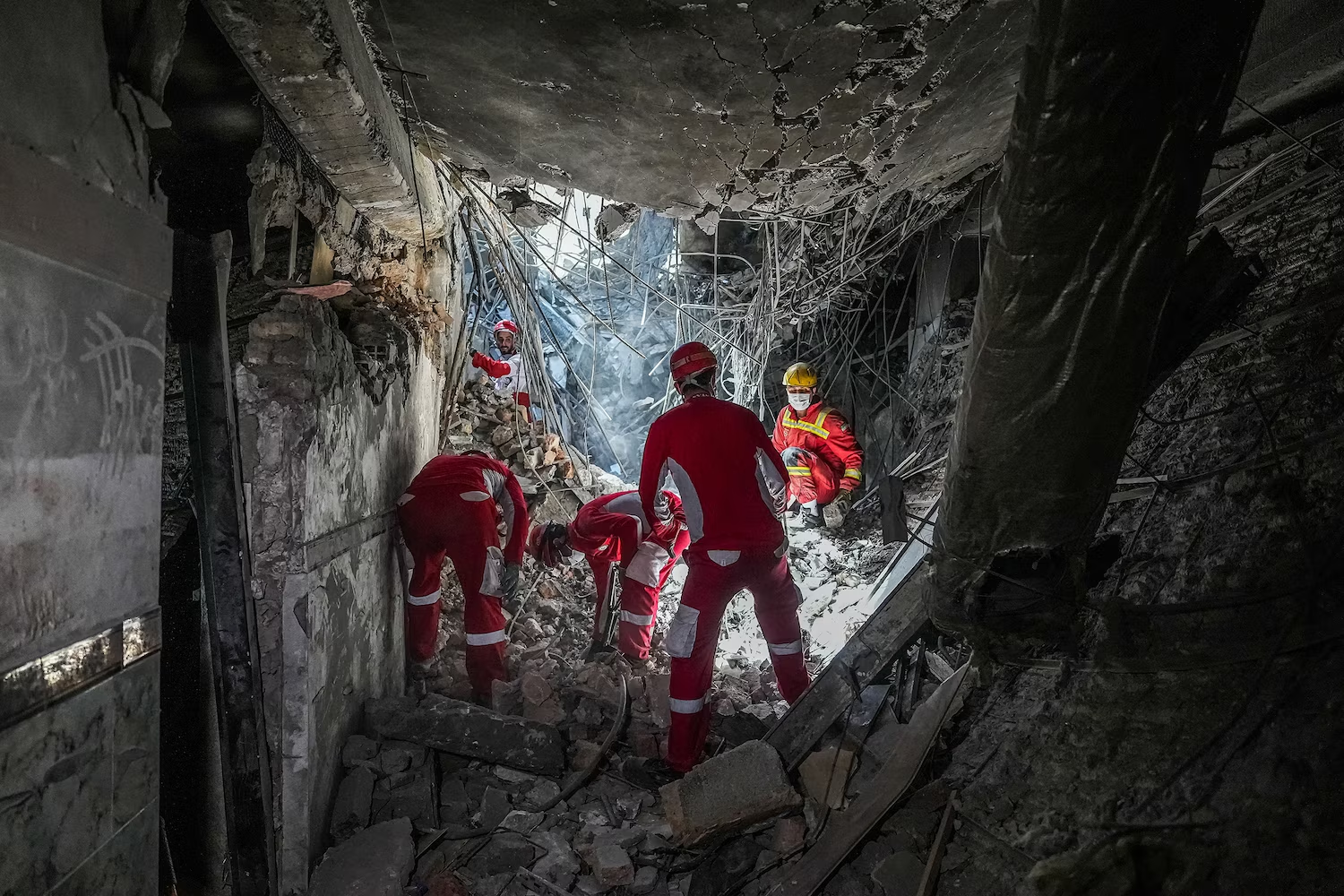

Iran’s judiciary confirmed Sunday that at least 71 people were killed in an Israeli airstrike last week on Tehran’s Evin prison — a notorious detention center long used to hold political prisoners, dissidents, and protesters.
The attack, which took place on June 23, just one day before the ceasefire between Israel and Iran took effect, has sparked outcry from human rights organizations and added to rising questions about the fragile truce’s future.
According to judiciary spokesperson Asghar Jahangir, the casualties included prison staff, soldiers, detainees, and visiting family members. The figures, published via the judiciary’s official Mizan news agency, were echoed by the U.S.-based Human Rights Activists in Iran (HRAI), which said at least 35 prison staff and two inmates were among the dead. The group also reported that a passerby and a woman visiting the prison to advocate for her jailed husband were killed.
The strike damaged multiple prison buildings and raised urgent concerns about the safety of those held inside. Rights groups criticized the Iranian government for failing to evacuate prisoners or notify families in the aftermath.
Symbol of State Repression Targeted
Though Israel did not specify why Evin was targeted, its Defense Ministry said on the day of the strike that it was hitting “regime targets and government repression bodies in the heart of Tehran.”
The Center for Human Rights in Iran, based in New York, condemned the attack, calling it a violation of international law due to the presence of civilians in the facility. Evin prison has long been symbolic of the Iranian regime’s crackdown on dissent.
Adding to the impact, Iran confirmed Saturday that a senior prosecutor, Ali Ghanaatkar — known for prosecuting human rights activists and Nobel laureate Narges Mohammadi — was among the dead. He was one of approximately 60 people honored in a public funeral procession in Tehran over the weekend, and was buried Sunday at the Qom shrine.
Attack Overshadowed by Ceasefire and Retaliation
The prison bombing was quickly overshadowed by a same-day Iranian missile strike on a U.S. military base in Qatar, which caused no casualties, and the formal announcement of a ceasefire between Iran and Israel.
The truce followed nearly two weeks of intense strikes. During that period, Israel claimed responsibility for killing approximately 30 Iranian military commanders and 11 nuclear scientists, striking over 700 military sites and eight nuclear-related facilities. Human rights monitors reported over 1,000 deaths, including more than 400 civilians.
In response, Iran launched over 550 ballistic missiles at Israel. Most were intercepted, but several caused widespread damage and killed at least 28 people.
Iran Demands Accountability
In a letter to the United Nations, Iranian Foreign Minister Abbas Araghchi called for the international body to hold both Israel and the United States accountable for what he termed an illegal war. He argued their actions against Iran’s sovereign territory warrant “compensation and reparation.”
Despite the ceasefire now in effect, Iranian officials have expressed skepticism about whether Israel will honor the deal. On Sunday, Iran’s armed forces chief of staff, Abdolrahim Mousavi, warned of a “strong response” if hostilities resume.
“We didn’t start this war, but if aggression repeats, we are fully prepared to defend ourselves,” he said in remarks carried by Iranian state TV.
Uncertainty Around Iran’s Nuclear Program
The full extent of damage to Iran’s nuclear program remains unclear. U.S. President Donald Trump has claimed that the strikes “obliterated” Iran’s capabilities — a statement Iran has called exaggerated.
Rafael Grossi, director of the International Atomic Energy Agency (IAEA), told CBS’s Face the Nation on Sunday that while there had been “severe damage,” it is not total, and Iran retains the ability to restart its enrichment operations.
“Iran still has the industrial and technological capacity to resume its nuclear activities,” Grossi said, noting that the IAEA cannot verify the extent of the damage without direct access, which Iran has not granted.
As the ceasefire approaches its one-week mark, tension remains high. The Evin prison strike — one of the most controversial moments in the recent conflict — continues to draw condemnation and raises difficult questions about the conduct of both governments as the region sits on edge.