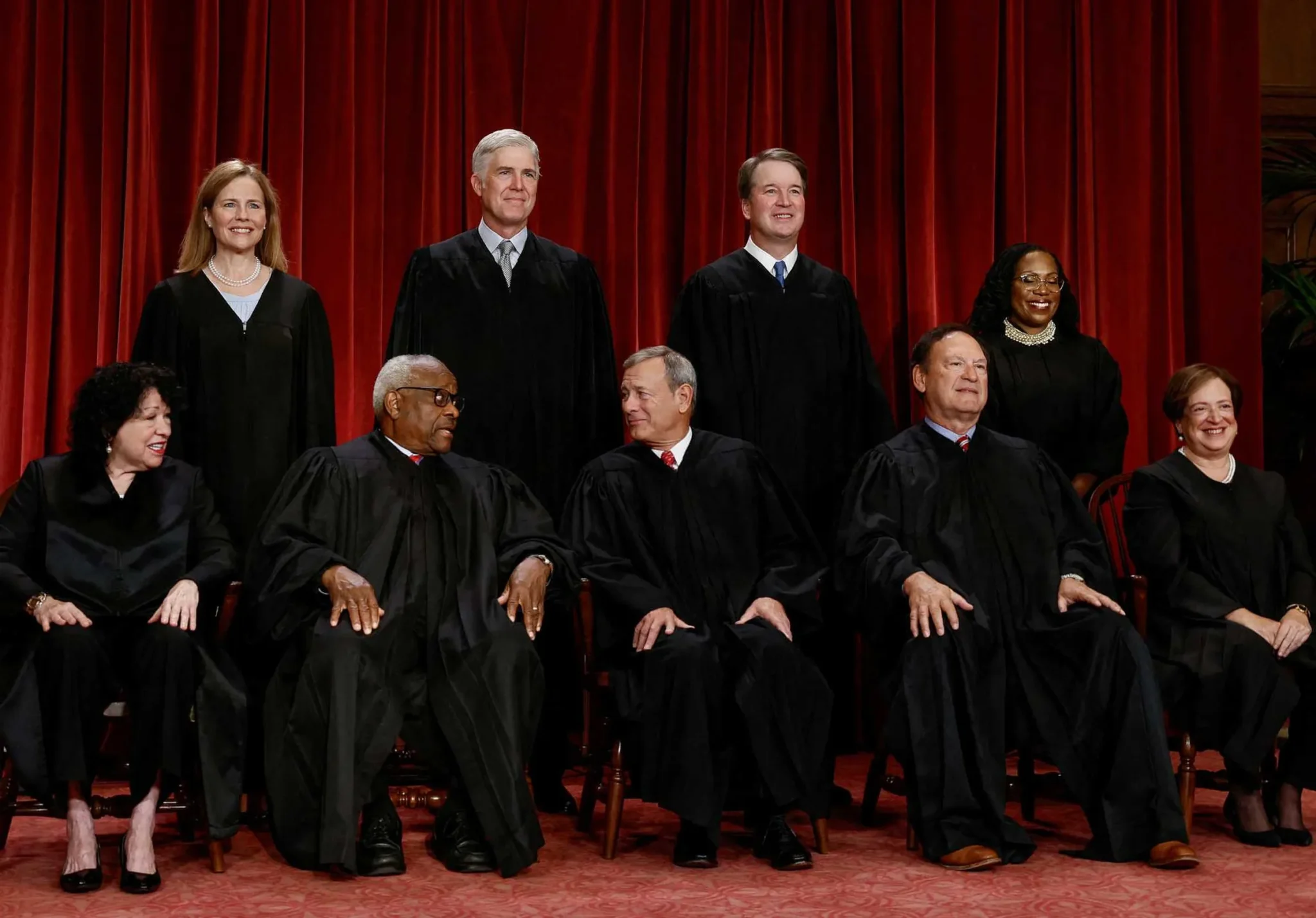

Graham Platner, a Democratic candidate vying for Maine’s U.S. Senate seat, has launched a preemptive strike against the Supreme Court, outlining a detailed plan to impeach Justices Samuel Alito and Clarence Thomas.
Platner told NBC that “reasonable grounds” exist to remove the two senior conservative jurists, who have faced intensifying ethical scrutiny throughout President Trump’s second term. The candidate’s platform represents a significant escalation in the Democratic Party’s rhetoric regarding judicial oversight and the separation of powers.
The Case for Removal
Platner’s argument for impeachment focuses on a series of alleged ethical lapses and controversial public stances. He specifically targeted the financial relationship between Justice Thomas and real estate magnate Harlan Crow, characterizing it as “clearly corrupt.”
“Justice Thomas doesn’t even recuse himself from cases that impact Crow’s businesses,” Platner stated, citing a perceived lack of impartiality.
The candidate also highlighted Justice Alito’s 2022 majority opinion in Dobbs v. Jackson, which dismantled federal abortion protections, and Justice Thomas’s recent remarks at the University of Texas Austin Law School. During that speech, Thomas denounced progressivism as a threat to the “basic premises of the Declaration of Independence,” a move critics argue compromises his judicial neutrality.
A Strategy of Oversight
Beyond the judiciary, Platner is signaling a broader “scorched-earth” approach to governance. If Democrats reclaim a Senate majority, he intends to leverage the chamber’s subpoena power to paralyze the current administration.
“I want to shut the White House down,” Platner said. “I want us to, for the next two years, be dragging every single person in the White House… in front of Senate committees over and over and over again.”
Platner also confirmed he remains open to expanding the Supreme Court by adding seats, a move proponents call “rebalancing” and critics label “court-packing.”
The Constitutional Hurdle
Despite Platner’s aggressive stance, the path to removing a Supreme Court justice is historically narrow. Under Article II of the Constitution, the process requires:
- House Impeachment: A simple majority vote in the House of Representatives to charge a justice with “high crimes and misdemeanors.”
- Senate Conviction: A formal trial followed by a two-thirds majority vote for removal.
To date, no Supreme Court justice has ever been removed from office through impeachment. While Justice Samuel Chase was impeached by the House in 1804, he was ultimately acquitted by the Senate. Platner’s proposal would require not only a seismic shift in the political composition of Congress but also a level of bipartisan consensus that has eluded the capital for decades.