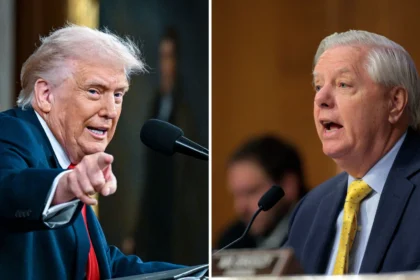
WASHINGTON — In a move that signals a bold shift in fiscal strategy, Republican Senators Ted Cruz (Texas) and Tim Scott (S.C.) have formally requested the U.S. Treasury Department to implement a $200 billion tax cut by bypassing the traditional legislative process. The proposal, detailed in a letter to Treasury Secretary Scott Bessent, urges the administration to “index” capital gains to inflation, a move that would significantly reduce the tax burden on investors without requiring a vote from Congress.
The Push for Inflation Indexing
The core of the senators’ argument rests on the “basis” of an asset—the original price paid. Currently, investors pay taxes on the nominal gain when an asset is sold, regardless of how much inflation has eroded the dollar’s value. Cruz and Scott contend that this “inflation tax” stifles economic mobility.
“This inflation tax unfairly penalizes savers and locks up capital that would otherwise flow back into the economy through new investment and higher wages,” the senators wrote. By adjusting the cost basis for inflation, the Treasury would effectively lower the taxable gain, a move supporters claim would catalyze nationwide job creation and boost private savings.
Addressing the Housing ‘Lock-In’ Effect
Beyond broad economic growth, the senators—including Scott, who chairs the Senate Banking, Housing, and Urban Affairs Committee—positioned the tax cut as a solution to the nation’s tightening housing market.
They argue that many long-term homeowners are refusing to sell because the resulting capital gains taxes on decades of appreciation are prohibitively high. This creates a “lock-in” effect, preventing “downsizing” and keeping family-sized homes off the market.
“Adjusting the capital gains cost basis for inflation incentivizes those who have held property for decades to downsize and list their single-family homes for sale—increasing the supply of family housing,” the letter stated.
This push comes as mortgage rates recently dipped below 6% for the first time in three years, potentially opening a window for increased market activity if supply constraints are eased.
Constitutional and Legal Hurdles
The proposal faces significant legal and expert opposition. Critics argue that the executive branch lacks the authority to redefine “cost” for tax purposes—a power traditionally reserved for the legislative branch under the Constitution’s Taxing and Spending Clause.
The 1992 Precedent
Legal experts frequently point to a 1992 Department of Justice (DOJ) Office of Legal Counsel opinion, which concluded that the Treasury Department does not have the legal authority to index capital gains through administrative action. Kyle Pomerleau, a senior fellow at the American Enterprise Institute, recently reiterated that such a move would likely be deemed illegal by the courts.
Economic Trade-offs
The fiscal impact of the proposal remains a point of contention. Data from the Penn Wharton Budget Model suggests:
- Revenue Loss: An estimated $102 billion reduction in government revenue over a decade.
- Wealth Distribution: Approximately 86% of the benefits would accrue to the top 1% of earners.
Jason Furman, a Harvard professor and former economic advisor, warned that indexing capital gains in isolation could create massive distortions. He noted that for the policy to be sound, the government would also need to reduce interest deductions to account for inflation—a move that would likely be unpopular with corporate borrowers.
A Direct Challenge to the Status Quo
The request places Secretary Bessent in a pivotal position. While the move aligns with President Trump’s stated goal of providing “special attention” to the housing market and broader deregulation, it invites a high-stakes legal battle with the potential to reach the Supreme Court.
As the Treasury Department reviews the proposal, the focus shifts to whether the administration will risk a constitutional showdown to bypass a divided Congress and deliver a signature piece of the GOP’s economic agenda.
What’s Next: The Treasury Department has not yet issued a formal response. Observers expect a signal from the White House in the coming days, which will determine if the administration intends to test the limits of executive power on federal tax policy.