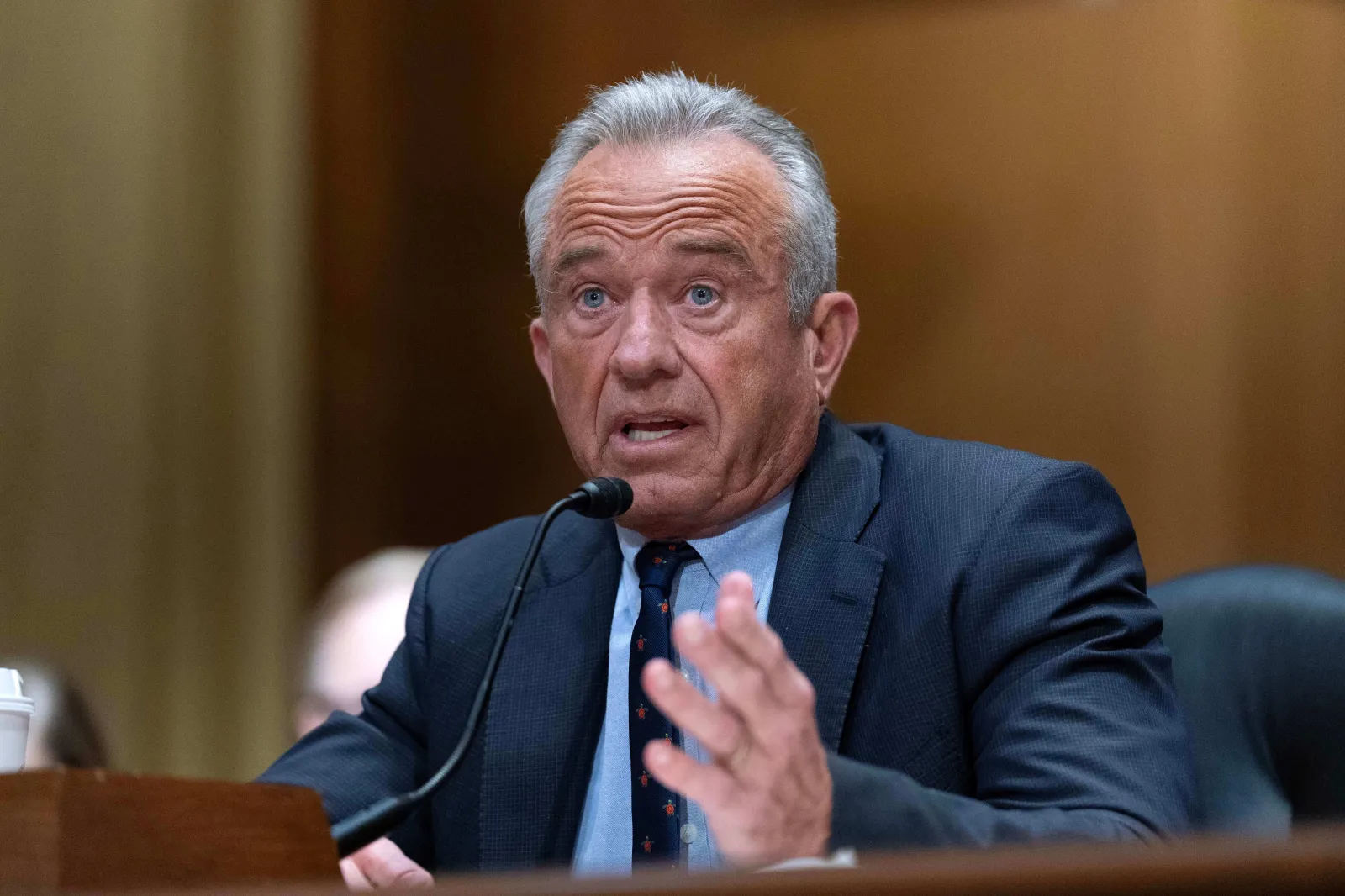

Health and Human Services (HHS) Secretary Robert F. Kennedy Jr. defended President Trump’s claims of “600 percent” prescription drug price cuts during a contentious Senate Finance Committee hearing Wednesday, acknowledging the administration utilizes a non-standard method for calculating consumer savings.
The testimony centered on TrumpRx, a federal initiative launched earlier this year to provide discounted brand-name medications through “most favored nation” agreements with pharmaceutical manufacturers. Kennedy argued that when the administration reduces the price of a drug from $600 to $10, it constitutes a “600 percent reduction.”
“President Trump has a different way of calculating,” Kennedy told lawmakers, conceding the math departs from traditional arithmetic.
Mathematical Defiance and Fact-Checking
Senator Elizabeth Warren (D-MA) led the rebuttal, noting that under standard mathematical principles, the $590 drop described by Kennedy represents a 98 percent reduction.
“Which I think means companies should be paying you to take their drugs,” Warren remarked. She warned that utilizing inflated percentages risks misleading patients regarding the actual savings available at the pharmacy counter.
The administration’s rhetoric has faced sustained scrutiny. An August 2025 investigation by The Associated Press confirmed that price reductions exceeding 100 percent are logically impossible, as such a figure would require the manufacturer to pay the consumer to accept the product.
Allegations of Corporate Quid Pro Quo
The hearing shifted from mathematical disputes to the mechanics of the TrumpRx program. Democratic committee members questioned the nature of the deals struck between the White House and the pharmaceutical industry.
Senator Warren alleged that participating companies may be receiving millions in tariff relief in exchange for listing their products on the government portal. She further challenged the program’s efficacy, asserting that patients face a one-in-four chance of finding lower prices at private retailers like Costco than on the government-run website.
Transparency Standoff
Kennedy remained defiant, pivoting the blame toward legislative gridlock. “We did this because you refused to do it,” Kennedy told Warren, suggesting the administration was forced to act unilaterally due to congressional inaction on drug pricing.
However, the Secretary refused to provide the underlying documentation for these deals. When pressed by Senator Ron Wyden (D-OR) to publish the written agreements finalized with pharmaceutical manufacturers, Kennedy declined, leaving the specific terms of the “most favored nation” arrangements shielded from public and legislative oversight.
The standoff leaves critical questions unanswered regarding the long-term sustainability of the TrumpRx program and the true cost of the administration’s negotiated discounts.