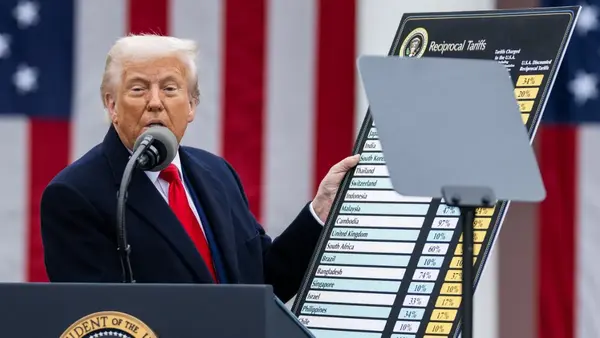

U.S. Customs and Border Protection (CBP) has initiated the largest refund operation in its history, beginning the process of returning $166 billion to American businesses. The massive payout follows a landmark Supreme Court decision that invalidated a series of Trump administration tariffs, ruling the executive branch overstepped its constitutional authority.
Effective April 20, the agency activated the Consolidated Administration and Processing of Entries (CAPE) tool within the federal Automated Commercial Environment (ACE) portal. This system allows over 330,000 importers to file claims for duties paid on more than 53 million shipments.
The Legal Reversal
The financial windfall is the direct result of a Supreme Court ruling that struck down the administration’s use of the International Emergency Economic Powers Act (IEEPA) to bypass Congress. The justices held that the power to impose taxes and tariffs resides exclusively with the legislative branch, rendering the previous executive mandates legally void.
Lower courts subsequently ordered the federal government to reverse the policy and issue full repayments plus interest. Investigative filings reveal that the scale of the error impacted nearly every sector of the U.S. economy, from manufacturing to retail.
Operational Challenges
CBP officials have warned that the volume of claims is “unprecedented.” While the agency aims to process most refunds within 60 to 90 days, the complexity of many trade entries may necessitate manual audits.
The refund process is being rolled out in phases:
- Phase 1: Unliquidated entries and shipments within 80 days of final accounting.
- Phase 2: Complex historical claims requiring detailed documentation.
- Interest Accrual: All validated claims will include interest payments, further increasing the total liability for the U.S. Treasury.
Economic and Political Implications
For the broader economy, the $166 billion injection serves as a significant liquidity event. Businesses previously stifled by high import costs now have capital available for reinvestment, hiring, or price reductions for consumers.
Beyond the balance sheet, the ruling reinforces a strict interpretation of the Harmonized Tariff Schedule and federal trade law. By curbing the President’s ability to unilaterally invoke national security or emergency statutes for trade intervention, the Court has re-established a rigorous check on executive power.
As the first checks begin to clear, the focus shifts to the long-term impact on global trade relations. While the refunds offer immediate relief to domestic importers, they also signal a definitive end to an era of trade policy characterized by executive improvisation rather than Congressional mandate.