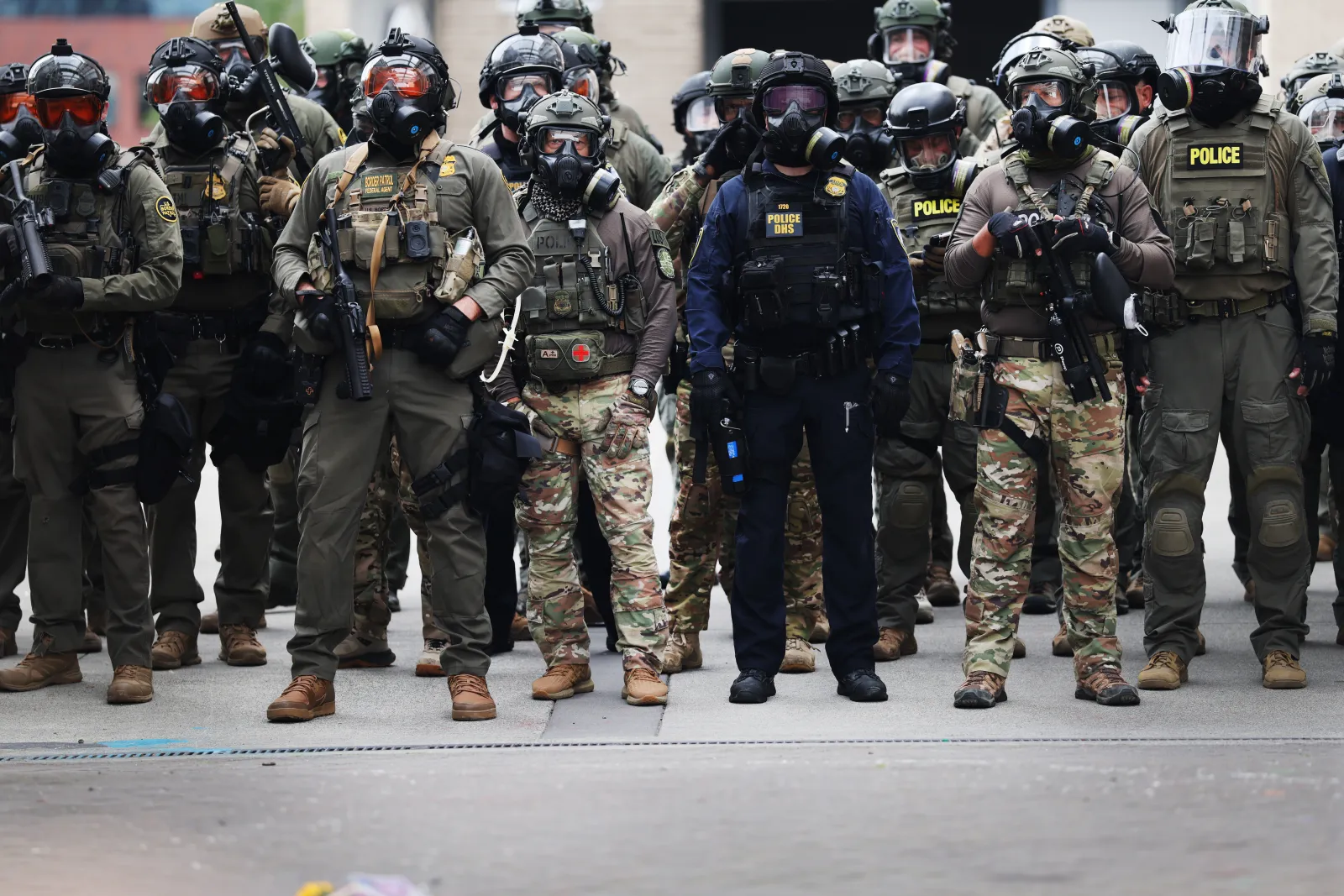

WASHINGTON — Seeking to head off what they describe as a “militarized” threat to American democracy, Democratic lawmakers are escalating efforts to legally bar federal immigration agents from polling sites ahead of the 2026 midterm elections.
The legislative push follows high-decibel rhetoric from Trump administration allies and a tense Senate hearing this week where Homeland Security Secretary Kristi Noem refused to explicitly rule out deploying agents to voting locations this November. While federal law long ago banned the military from election sites, a loophole remains regarding civilian federal law enforcement agencies like U.S. Immigration and Customs Enforcement (ICE) and Customs and Border Protection (CBP).
Legislation Aims to Close ‘Gap’ in Federal Law
Representative April McClain Delaney (D-MD) announced the Democracy Without Intimidation Act on March 3, 2026, aimed at making it a criminal offense for senior federal officials to order agents to polling places. The bill would impose penalties of up to five years in prison for violations.
“As many Americans head to the polls today, don’t forget President Trump wants ICE and federal officers at polling sites to intimidate voters,” McClain Delaney stated in a release. “My legislation would stop him from eroding our democracy.”
The bill joins the Stop ICE Election Militarization Act, introduced by Reps. John Larson (D-CT), Nikema Williams (D-GA), and Veronica Escobar (D-TX). That measure would:
- Criminalize interference by immigration entities at polling places.
- Restrict enforcement actions within 200 feet of voting sites in the four weeks leading up to an election.
- Permit exceptions only for cases of individualized probable cause or imminent public safety threats.
Noem Refuses to Rule Out Deployments
The legislative urgency was catalyzed by testimony from DHS Secretary Kristi Noem before the Senate Judiciary Committee on March 3. Under sharp questioning from Senator Chris Coons (D-DE), Noem stated the agency has “no plans” to station officers at polls but stopped short of a definitive pledge.
“Will you rule out the deployment of ICE or CBP to polling places this November?” Coons asked.
“There are no plans to have ICE officers at our polling locations,” Noem replied, before pivoting to a recurring administration talking point: “Do you plan on illegal aliens voting in our elections? There should be no need to [deploy agents], unless you plan on illegals voting.”
The exchange underscored a deepening rift over election security. While the administration frames the potential presence of agents as a deterrent against non-citizen voting—a phenomenon studies show is extremely rare—critics argue it is a calculated tactic to suppress turnout in immigrant-heavy districts.
The ‘Bannon Effect’ and Rising Tensions
The controversy is fueled by recent statements from former White House strategist Steve Bannon. On his War Room podcast in February, Bannon told listeners, “You’re damn right we’re gonna have ICE surround the polls come November.”
Though Bannon holds no official government role, his influence within the “MAGA” movement and proximity to the President have led state election officials to prepare for potential disruptions. In Minnesota, the fallout from “Operation Metro Surge”—a DHS operation that resulted in the fatal shooting of two U.S. citizens by federal agents earlier this year—has already led to state-level lawsuits and calls for stricter oversight of federal personnel.
Current Legal Protections vs. Proposed Changes
| Current Status | Proposed Change (Democracy Without Intimidation Act) |
| Military explicitly barred by 18 U.S.C. § 592. | Extends explicit criminal ban to all civilian federal law enforcement. |
| No specific statute for civilian agencies (ICE/CBP). | Up to 5 years imprisonment for ordering agents to polls. |
| General voter intimidation is illegal. | Creates a 200-foot “no-enforcement” buffer zone. |
A Look Ahead
With Republicans holding a narrow majority in the House, both Democratic bills face significant hurdles. GOP leadership has largely dismissed the efforts as “political theater,” focusing instead on the SAVE Act, which would mandate proof of citizenship for federal elections.
As the 2026 midterms approach, the standoff moves to the states. California and Connecticut are already considering local statutes to limit federal agent access to voting centers, potentially setting up a constitutional showdown over federal vs. state authority at the ballot box.