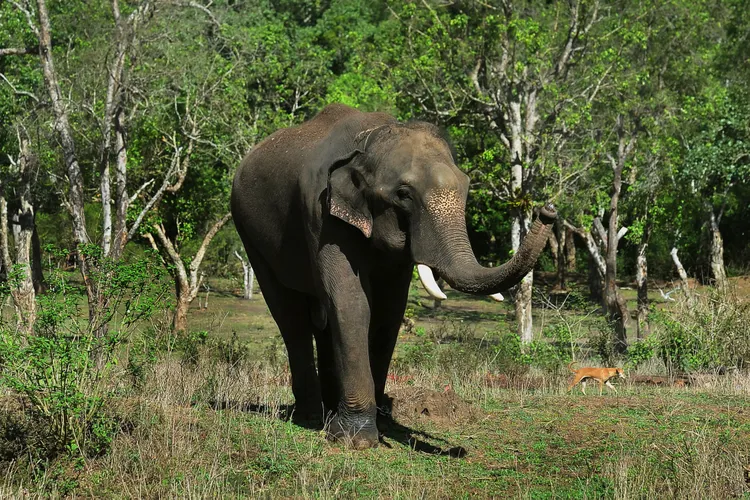

At least 17 people — including four members of the same family — have been killed in a string of elephant attacks in India over just a few days.
Multiple reports say the elephant, believed to be a young adult male, has been involved in roughly a dozen separate attacks since Jan. 1 in Jharkhand’s West Singhbhum district, in eastern India.
One of the latest victims was a woman who died from her injuries at a local hospital on Wednesday, Jan. 7. Other recent victims were identified as Chipri Chimpi from the village of Sialjod, 40-year-old Prakash Das, and a minor boy. In Das’ case, local reporting said the injuries were catastrophic.
In another incident in the village of Babadia, a husband, wife, and their two children were reportedly killed in a single attack.
Forest officials say teams have so far been unable to locate the elephant, but the search has expanded, with government and independent agencies from across India joining the effort. Once the animal is found, the forest department plans to tranquilize and relocate it.
:max_bytes(150000):strip_icc():focal(999x0:1001x2):format(webp)/Elephant-stampedes-011026-2-dcecf682ac4b40a3a747d1fa052350bc.jpg)
Divisional forest officer Aditya Narayan said multiple teams are camping in the area while trying to trace the elephant, and officials have issued public advisories on what to do if residents encounter one. Another forest department officer described the elephant’s movement as erratic, suggesting it may be moving across a wide area — roughly a 100-kilometer (about 62-mile) circumference spanning three forest divisions — and said it was last tracked on Thursday, Jan. 8.
The region’s chief forest conservator, Smita Pankaj, said the priority is preventing any further loss of life.
Local authorities are also working on relocating residents from villages in the most affected zones while wildlife experts continue efforts to track the elephant. West Singhbhum Deputy Commissioner Chandan Kumar said officials are identifying safer nearby areas for those living close to the elephant’s recent route.
According to local eyewitness accounts, many attacks have taken place at night while people were asleep. Residents have reportedly used firecrackers and organized patrols to try to keep the animal away from densely populated areas.
The elephant is believed to be in musth, a periodic hormonal state in male elephants during which testosterone levels rise sharply and aggression can increase.
Residents have called for longer-term measures to reduce dangerous human–elephant encounters and for compensation for the families of those killed.