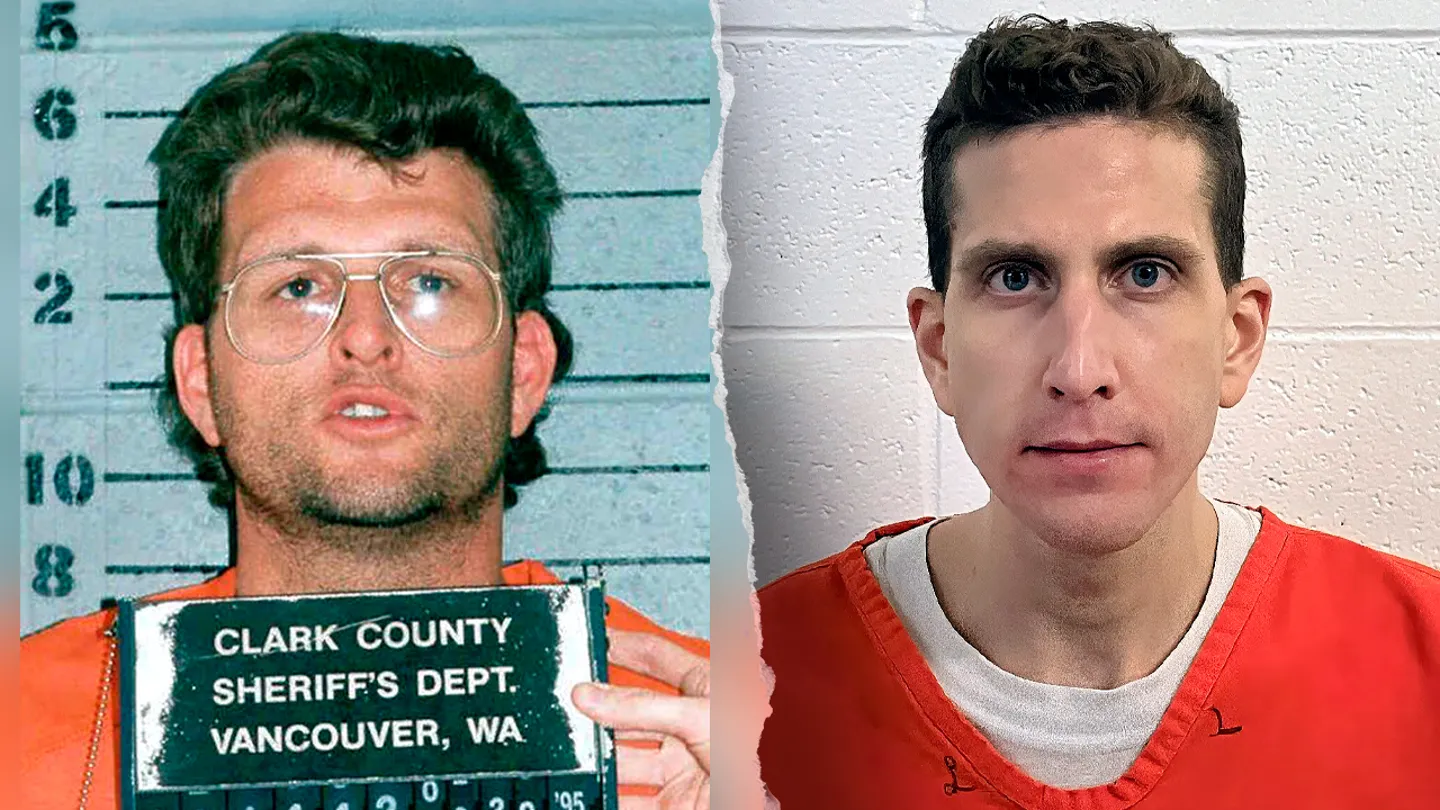

Keith Jesperson, the notorious “Happy Face” serial killer, says Idaho student murderer Bryan Kohberger would be safer serving his life sentence in Oregon — the same maximum-security prison Jesperson calls home.
“His best hope is to be transferred to here, the max prison in Oregon, to be away from those who want to make a name for themselves by killing him,” Jesperson wrote in a note to former prison minister and true crime podcaster Keith Rovere, who shared the message with Fox News Digital. “This prison gets inmates from other states in order to protect them from the drama.”
Jesperson, a former long-haul trucker who murdered at least eight women in the 1990s, earned his nickname for doodling smiley faces on his letters to media and police. From behind bars, he’s known for corresponding with other infamous criminals and has claimed responsibility for many more murders than authorities have confirmed.

In another note, Jesperson added, “I will write to the Idaho Department of Corrections to tell them to consider sending Kohberger here to save them the high-risk security issues in protecting him in Idaho.”
Rovere, host of The Lighter Side of True Crime, told Fox News Digital that Kohberger may struggle in prison due to a lack of both “street smarts” and “prison smarts.”
Kohberger, now 30, recently pleaded guilty to the brutal 2022 stabbings of four University of Idaho students — Madison Mogen, Kaylee Goncalves, Xana Kernodle, and Ethan Chapin — in a shocking plea deal that spared him the death penalty. He will instead spend the rest of his life in prison with no possibility of parole.
The Idaho Department of Correction has not indicated any plans to transfer Kohberger out of state. “The safety and security of staff and the population are a priority in everything IDOC does, including placement,” said agency spokesperson Blake Lopez.
Kohberger is currently undergoing evaluation at the Idaho Maximum Security Institution in Kuna, where officials are assessing his long-term housing needs. He is expected to remain in isolation for several weeks.
Although Idaho is not part of an interstate compact that allows for prisoner transfers between western states, Jesperson’s suggestion is not without precedent. Oregon, where he is housed at the Oregon State Penitentiary in Salem, has accepted out-of-state inmates under certain conditions involving safety concerns or special needs.
Defense attorneys for Kohberger revealed during court proceedings that he had been diagnosed with autism and displayed various behavioral issues, such as difficulty with eye contact, social awkwardness, and slow verbal processing. He was often rigid and expressionless in court, though at times he smirked or slightly nodded as victims’ families delivered emotional impact statements.
Jesperson warned that Kohberger’s demeanor, crimes, and lack of prison experience will make him an easy target behind bars. “In the general population, he will be singled out right away to be made a target for those who see him as weak for the crimes of that kind of murder,” he wrote. “Most likely, Idaho will put him in protective custody like Dahmer. But we all know how that ended.”
Serial killer Jeffrey Dahmer was beaten to death in 1994 by a fellow inmate at a Wisconsin prison after being placed in protective custody. Jesperson suggested Kohberger could face a similar fate.
Kohberger’s case drew national and international attention due to the shocking nature of the killings — a late-night attack on four students in their off-campus home with no known motive or connection to the victims. The investigation went on for weeks before a crucial clue, a knife sheath containing Kohberger’s DNA, led authorities to him.
While his plea deal brings the legal case to a close, lingering questions remain about what motivated the attack and what exactly Kohberger was thinking in the months leading up to it.
With no public sign of remorse and a crime considered particularly cowardly — three of the four victims were asleep — Kohberger’s future behind bars is likely to be fraught with tension and risk.
The Idaho Department of Correction said it will determine his final placement after completing its standard 7- to 14-day intake evaluation.