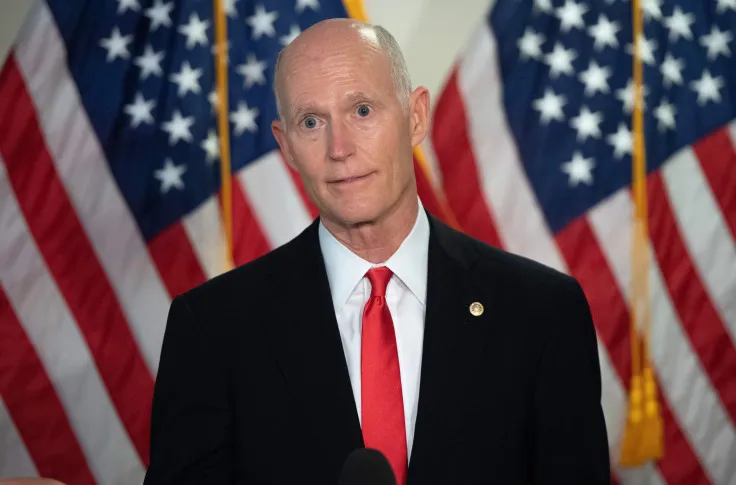

WASHINGTON — Senator Rick Scott (R-FL) signaled a hardline shift in U.S. foreign policy priorities this week, asserting that the total dismantling of the Iranian regime outweighs immediate concerns regarding soaring domestic energy costs. Scott’s comments come as the closure of the Strait of Hormuz—a vital artery for 20% of the world’s energy supply—continues to destabilize global markets following recent military escalations.
Security Over Subsidy
In an interview with CNN, Scott dismissed concerns over the economic fallout of a prolonged conflict, framing the war as an existential necessity for American survival. When pressed on how the administration intends to lower gas prices while the primary shipping lane for Middle Eastern crude remains blocked, Scott redirected the focus to Tehran’s nuclear and ballistic capabilities.
“Do I want oil prices to come down? I want them to come down badly,” Scott stated. “But I don’t want to die. And I don’t want people in this country to die of a nuclear weapon from Iran.”
The Senator’s rhetoric emphasizes a “security-first” doctrine, arguing that the 47-year history of hostilities with Iran must reach a definitive conclusion to prevent conflict on American soil.
Internal Dissent and Intelligence Disputes
While Scott maintains that Iran poses a “clear and imminent” threat, the consensus within the intelligence community appears fractured. On Tuesday, Joe Kent, Director of the National Counterterrorism Center, resigned in a high-profile protest against the ongoing war.
In a scathing exit statement, Kent alleged that the U.S. entered the conflict due to external political pressures rather than verified intelligence. “Iran posed no imminent threat to our nation,” Kent claimed, suggesting the escalation was driven by lobbying interests.
House Speaker Mike Johnson (R-LA) immediately moved to discredit Kent’s claims, reaffirming the GOP leadership’s stance that Iran was on the verge of nuclear enrichment. “I don’t know where Joe Kent is getting his information,” Johnson said, doubling down on the narrative of an urgent nuclear threat.
Strategic Stalemate
The political fallout arrives at a sensitive time for the administration. Director of National Intelligence Tulsi Gabbard has maintained a conspicuous silence since the joint U.S.-Israeli strikes began on February 28, leaving a vacuum of official clarity regarding the war’s endgame.
As the Strait of Hormuz remains impassable, the U.S. economy faces a dual challenge: sustained inflationary pressure from energy costs and a deepening divide among top-level security officials over the legitimacy of the war. For now, influential voices like Senator Scott are signaling that the American public must prepare for economic sacrifice in exchange for regional regime change.