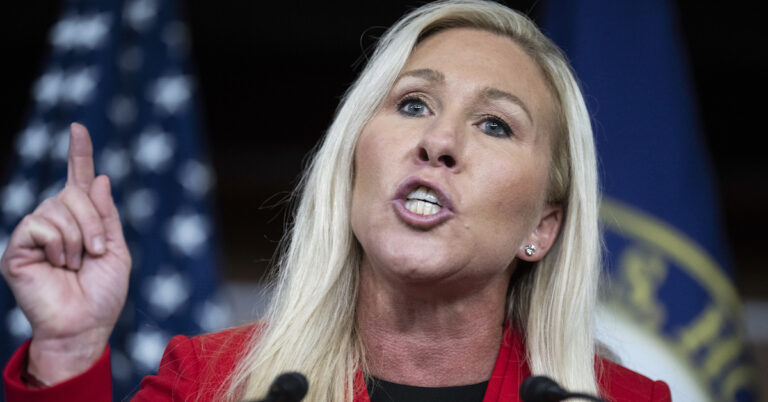

Rep. Marjorie Taylor Greene, who once cheered on efforts to overturn the 2020 U.S. election, is now raising alarm over democracy abroad — but her latest comments about Ukraine have drawn sharp criticism for being misleading and politically charged.
The Georgia congresswoman posted a video on social media showing large crowds gathered in Ukrainian cities during mass protests on July 22–23. Without context, Greene celebrated the unrest as a sign that Ukrainians were rising up against their president, writing: “Good for the Ukrainian people! Throw him out of office!”
She was referring to Ukrainian President Volodymyr Zelensky and used the post to renew her call for the United States to halt aid to Ukraine. The video quickly went viral, drawing over 3.9 million views and thousands of responses.
However, Greene’s interpretation of the demonstrations contradicts eyewitness reports and journalism from the ground. The protests were not about Zelensky’s refusal to negotiate with Russia, as Greene claimed, but were sparked by his decision to sign a controversial law undermining key anti-corruption agencies.
What Really Happened in Ukraine
The protests were sparked by Zelensky’s move to bring two anti-corruption bodies — NABU and SAPO — under tighter executive control. These institutions were established after Ukraine’s 2014 revolution to help fight corruption and align the country with European Union standards.
Critics of the new law say it jeopardizes the independence of those bodies and threatens Ukraine’s path toward EU membership. Transparency International’s Ukraine branch called the legislation a “massive setback” and a “direct threat” to democratic reform. The European Commission also warned the law could damage Ukraine’s candidacy status.
High-profile leaders, including Kyiv Mayor Vitali Klitschko, joined the protests and accused Zelensky of dragging the country “faster and faster into authoritarianism.”
Fact-Checkers Push Back on Greene’s Claims
Journalists and fact-checkers quickly responded to Greene’s characterization of the protests. The Kyiv Independent reported that its journalists on the scene found no evidence that protesters were demanding peace talks with Russia — a claim Greene had made. Instead, the crowds were voicing concern about democratic backsliding and corruption, not military policy.
Greene also accused Zelensky of acting like a “dictator” and claimed Ukraine was no longer holding elections or allowing press freedom — statements that do not reflect the current political landscape in Ukraine.
A Familiar Pattern
Greene’s comments reflect a broader trend in her rhetoric: pushing misinformation while opposing U.S. support for Ukraine. Since Russia’s 2022 invasion, she has repeatedly called for an end to military and financial aid to Kyiv, arguing it’s a waste of American taxpayer dollars.
Her remarks this week struck many as especially ironic, given her past support for overturning election results in the U.S. — including her vocal backing of the January 6 Capitol riot. Critics pointed out the contradiction of Greene suddenly expressing concern for democratic governance abroad while downplaying democratic norms at home.
As Ukraine struggles to balance wartime unity with political accountability, many observers warn that Greene’s misrepresentations risk muddying public understanding of a complex and critical moment for one of America’s closest allies.