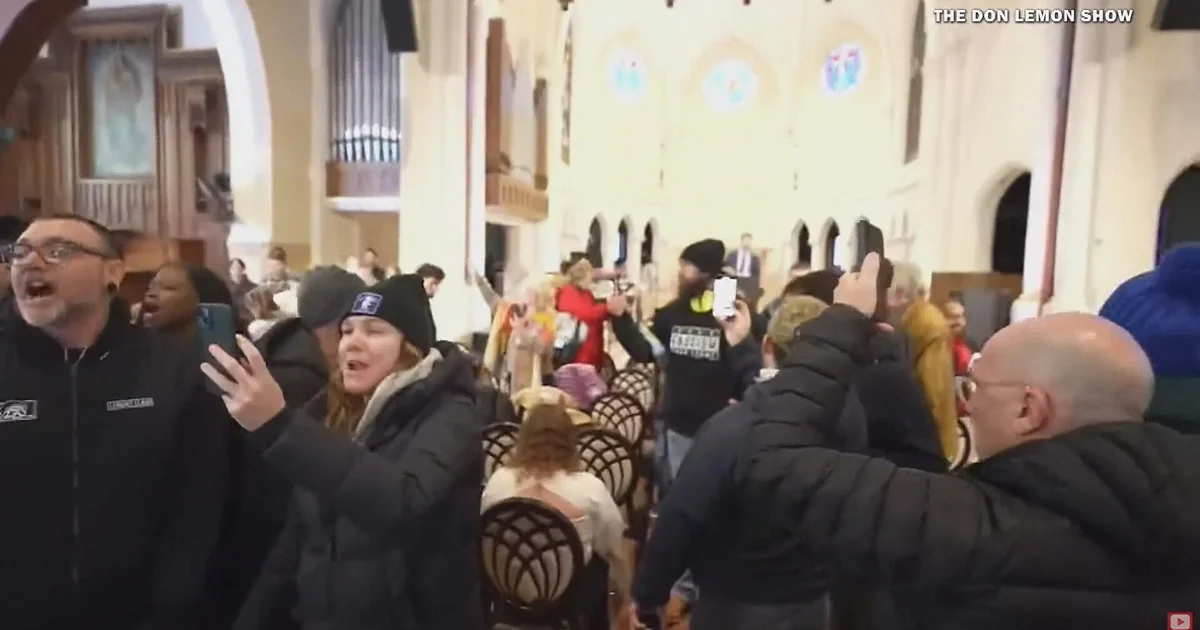

ST. PAUL, MN — The U.S. Department of Justice significantly escalated its criminal civil rights case on Friday, unsealing a superseding indictment that charges 30 additional individuals for their involvement in a January anti-ICE protest at Cities Church. The expansion brings the total number of defendants to 39 in a high-stakes legal battle that has drawn national scrutiny for its inclusion of journalists, including former CNN anchor Don Lemon.
Arrests Underway as Federal Case Widens
The unsealing of the indictment in the U.S. District Court for the District of Minnesota follows a months-long investigation into the demonstration targeting the St. Paul house of worship. Attorney General Pam Bondi confirmed via a statement on X (formerly Twitter) that 25 of the 30 newly charged individuals have already been taken into custody.
“More arrests are to come,” Bondi stated, signaling the department’s intent to pursue all participants identified in the protest.
The original nine defendants, which include Lemon and journalist Georgia Fort, previously pleaded not guilty to the charges. While the superseding indictment increases the number of individuals facing prosecution, it does not introduce new criminal counts.
Understanding the FACE Act and Conspiracy Charges
The government’s case rests on two specific federal statutes aimed at protecting religious freedom. All 39 defendants are accused of violating:
The FACE Act (Freedom of Access to Clinic Entrances Act): Specifically, a misdemeanor provision that prohibits the intimidation of or interference with persons exercising their constitutional right to practice religion.
Conspiracy to Interfere with Religious Rights: A felony charge alleging a coordinated effort to obstruct the congregants’ rights.
Doug Wardlow, an attorney with True North Legal representing Cities Church, praised the DOJ’s expanded efforts. “This sends a clear message: houses of worship are off-limits for those who would use chaos and intimidation to advance a political agenda,” Wardlow said.
Legal Experts Question Constitutional Basis
Despite the DOJ’s aggressive stance, former federal civil rights attorneys have voiced skepticism regarding the viability of the charges. Critics argue the application of the FACE Act in this context may be legally flawed.
While the First Amendment protects religious freedom from government overreach, legal experts told CBS News it does not explicitly protect individuals from the actions of private citizens, such as protesters or reporters. Historically, the FACE Act—enacted in 1994—has been used almost exclusively to prosecute interference at reproductive health clinics under the justification of protecting interstate commerce.
Previous attempts by the DOJ to secure arrest warrants in this case were met with resistance. A magistrate judge originally rejected five warrants, including those for the journalists, citing a lack of probable cause.
Journalists Allege Political Motivation
The inclusion of Don Lemon and Georgia Fort has turned the case into a flashpoint for press freedom. Both journalists have filed motions requesting the disclosure of grand jury transcripts—a rare move due to strict secrecy rules.
In court filings, Lemon and Fort argued the prosecution is “nakedly political” and “inconsistent with practice in this District.” They contend that after multiple judges initially declined to approve charges, the government pivoted to a grand jury to secure an indictment they claim was demanded by the executive branch.
“The government has squandered the presumption of regularity,” their filing stated, highlighting the “highly unusual” nature of prosecuting journalists covering a public protest.
What’s Next
The case now moves toward the discovery phase as the court weighs the defendants’ requests for grand jury transparency. Legal analysts expect the defense to file motions to dismiss, challenging the DOJ’s interpretation of the FACE Act. The outcome could set a major precedent for how federal civil rights laws are applied to protests occurring on private religious property and the extent of legal protections for journalists on the scene.