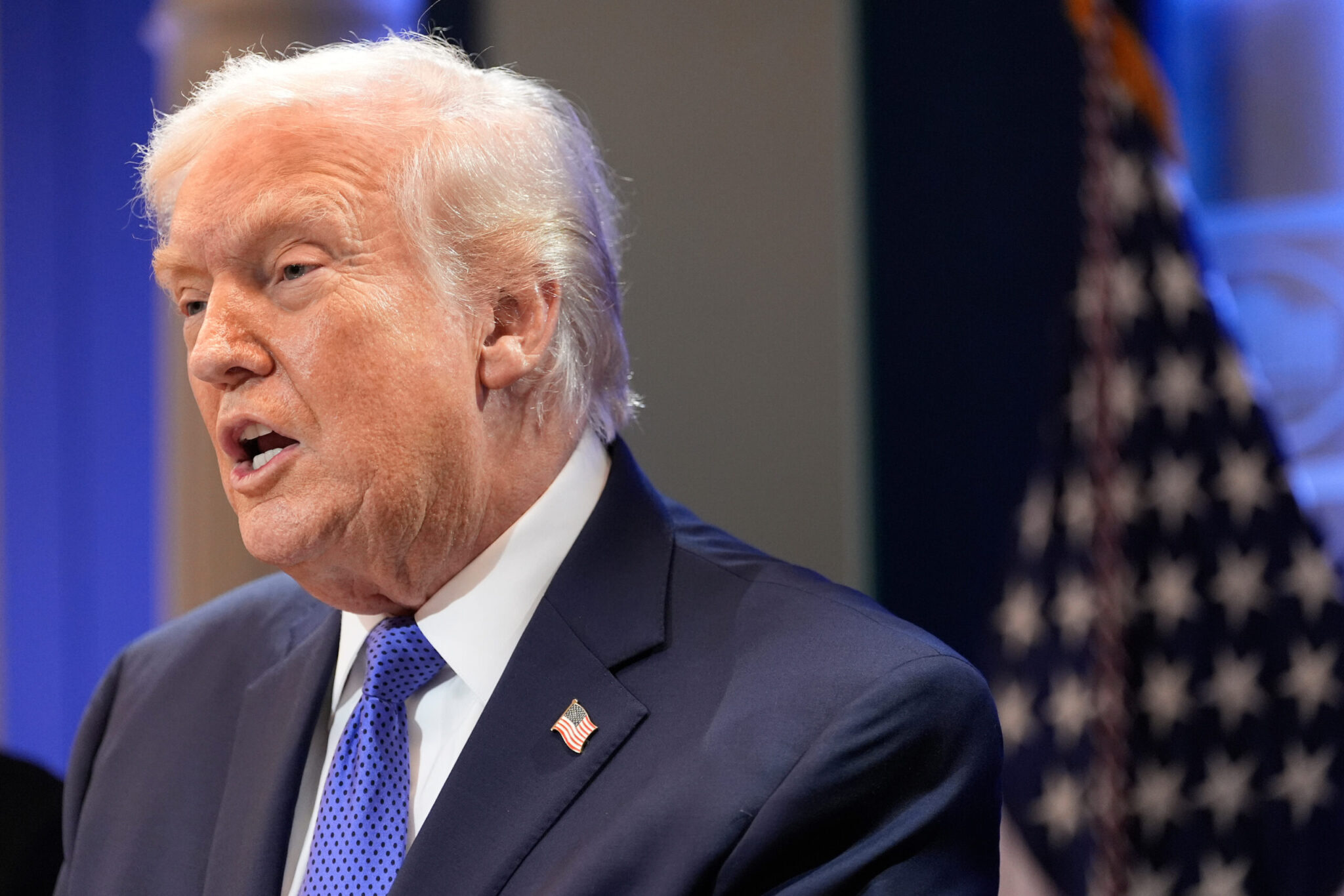

WASHINGTON — President Donald Trump declared Monday that the ongoing U.S.-Israeli military campaign against Iran is the “last best chance” to dismantle the Islamic Republic’s nuclear ambitions and ballistic missile infrastructure. Speaking from the White House during a Medal of Honor ceremony, the President outlined a multi-stage objective for Operation Epic Fury, while signaling that American involvement could extend well beyond initial timelines.
The President’s remarks come as the Pentagon moves to justify a rapid escalation in hostilities that has already claimed the lives of four U.S. service members and decimated a significant portion of the Iranian Navy.
Defining the Mission: Four Strategic Objectives
President Trump characterized the Iranian regime as a “clear, colossal threat” to the United States and its global allies. According to the administration, the decision to launch a preemptive strike was driven by intelligence suggesting Iran was on the verge of developing intercontinental ballistic missiles (ICBMs) capable of reaching the American mainland.
The President identified four primary goals for the current military operations:
Neutralization of Missile Capabilities: Systematic destruction of launch sites and production facilities.
Maritime Superiority: The total “annihilation” of the Iranian Navy, with 10 vessels reported sunk to date.
Nuclear Prevention: Permanent disruption of the regime’s path to a nuclear weapon.
Counter-Terrorism: Severing the financial and logistical pipelines to Tehran’s regional proxies.
“This was our last best chance to strike… and eliminate the intolerable threats posed by this sick and sinister regime,” Trump stated, emphasizing that the mission would continue until every objective is met.
Timeline Fluidity and the Question of Ground Troops
While the administration initially projected a timeline of four to five weeks for the campaign, the President clarified on Monday that the U.S. military is prepared for a protracted conflict. “We have the capability to go far longer than that,” Trump said, dismissing suggestions that he might lose interest in a long-term engagement.
Crucially, the Commander-in-Chief refused to rule out the deployment of “boots on the ground.” Unlike previous administrations that often drew hard lines against land invasions, Trump noted he does not have the “yips” regarding ground forces.
“I say ‘probably don’t need them,’ [or] ‘if they were necessary’ [I would deploy them],” Trump told reporters.
Defense Secretary Pete Hegseth echoed this stance in a separate briefing, declining to provide specific parameters for troop movements. Hegseth confirmed that while no U.S. service members are currently stationed on Iranian soil, the Pentagon maintains full “latitude” to adjust tactics as the battlefield evolves.
The Human Cost: Operation Epic Fury
The conflict has already turned lethal for American forces. Four U.S. service members were killed in action after a munition struck a tactical operations center in Kuwait. The President acknowledged the loss, warning the American public to prepare for further casualties as the bombing campaign intensifies.
Military Progress Report
General Dan Caine, Chairman of the Joint Chiefs of Staff, reported that more than 1,000 targets were neutralized within the first 24 hours of the conflict. The opening salvos of the war achieved a major symbolic and structural blow to the regime, with Israeli strikes successfully targeting Supreme Leader Ayatollah Ali Khamenei and several high-ranking officials.
| Asset Type | Status Post-Strike |
|---|---|
| Iranian Navy | 10 Ships Confirmed Sunk |
| Missile Infrastructure | Ongoing Hourly Degradation |
| Leadership | Supreme Leader Khamenei Confirmed Deceased |
| U.S. Casualties | 4 Service Members (Kuwait) |
Regional Retaliation and Global Fallout
Tehran has responded to the decapitation of its leadership with barrages of missiles and drone swarms directed at Israel, Gulf nations, and U.S. facilities across the Middle East. The escalation has placed regional allies on high alert as the “shadow war” between Israel and Iran transitions into a full-scale conventional conflict.
As the U.S. military continues large-scale combat operations, the international community remains divided on the intervention. Critics argue the strikes could destabilize the global energy market, while the White House maintains that the cost of inaction—a nuclear-armed Iran—would be far higher.
What’s Next: Military analysts are watching for a potential Iranian counter-offensive in the Strait of Hormuz. Meanwhile, the Pentagon is expected to release updated damage assessments of Iran’s hardened nuclear facilities in the coming days.