
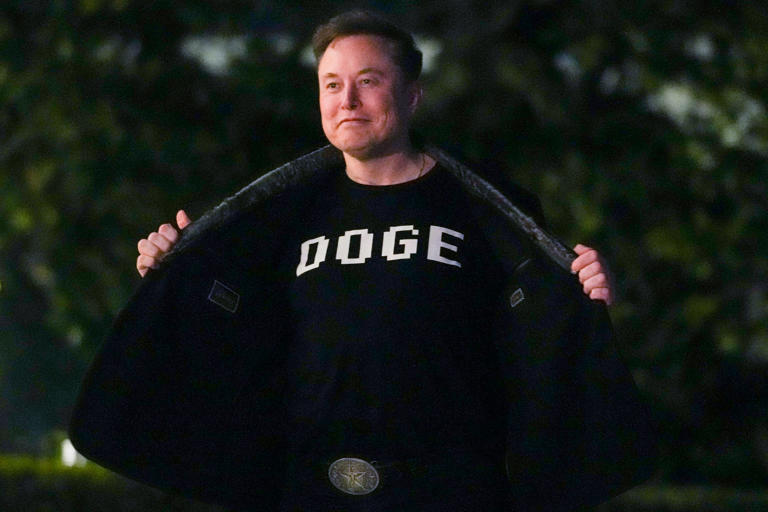

Two members of Elon Musk’s DOGE team working inside the Social Security Administration were quietly in contact with an advocacy group seeking to “overturn election results in certain states,” and one signed an agreement that may have involved using Social Security data to help match state voter rolls, according to newly disclosed court papers from the Justice Department.
In a filing dated Friday, Elizabeth Shapiro — a senior Justice Department official — said the SSA referred both employees for potential Hatch Act violations, a law that restricts federal employees from using their official roles for political activity.
Shapiro’s disclosure appeared in a set of “corrections” to earlier testimony by top SSA officials during last year’s legal fight over DOGE’s access to Social Security data. The updated record also raised concerns that DOGE team members shared data on unapproved third-party servers and may have accessed private information that a court had already ruled off-limits at the time.
Shapiro said the situation undercuts earlier assertions that DOGE’s work inside SSA was focused on “detect[ing] fraud, waste and abuse” and modernizing the agency’s technology.
“SSA believed those statements to be accurate at the time they were made, and they are largely still accurate,” Shapiro wrote. She added that, so far, there is no evidence that SSA employees outside the involved DOGE team members knew about the communications with the advocacy group or about the “Voter Data Agreement.”
The filing does not identify the two DOGE team members or the advocacy group. Shapiro said it remains unclear whether any data was actually shared, but emails “suggest that DOGE Team members could have been asked to assist the advocacy group by accessing SSA data to match to the voter rolls.”
The White House and SSA officials did not immediately respond to requests for comment.
Shapiro also disclosed that Steve Davis, described as a senior adviser to Musk and DOGE’s team, was copied on a March 3, 2025 email that included a password-protected file containing private information for about 1,000 people housed in Social Security systems. Shapiro said it’s unknown whether Davis ever accessed the file — and that current SSA employees have been unable to access it to confirm exactly what it contained.
While SSA continues to maintain that DOGE “never had access to SSA systems of record,” Shapiro said it’s possible that some restricted data “derived from” Social Security systems was sent to Davis.
Davis did not immediately respond to a request for comment.
The corrections also described additional access issues. In one instance, a DOGE team member was briefly granted access to private Social Security profiles even after a court barred it, though Shapiro said the access was never “utilized.” In another, a DOGE team member had access for two months to a “call center profile” containing private information.


