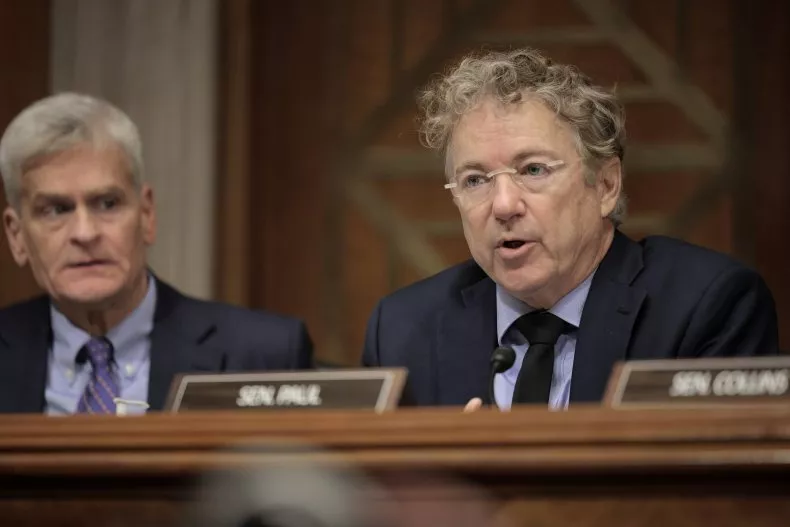

Republican Senators Bill Cassidy and Rand Paul have been debating on social media about whether newborns should get the hepatitis B vaccine.
Paul, an ophthalmologist, wrote on X that there was “no medical reason” to give the vaccine at birth if the mother is not infected.
Cassidy, also a doctor, disagreed, saying Paul’s claim is “not true.” He explained that babies infected at birth have a much higher risk of developing liver cancer and spreading hepatitis B to others.
Both senators serve on the Senate Committee on Health, Education, Labor and Pensions, with Cassidy as the committee’s chair.
Why It Matters
The debate comes after Health and Human Services Secretary Robert F. Kennedy Jr., who has questioned vaccines in the past, removed every member of the Advisory Committee on Immunization Practices (ACIP) earlier this year. He replaced them with a group that included several vaccine skeptics. In June, they said they would review how children’s vaccines, including the hepatitis B shot and the MMRV vaccine (which protects against measles, mumps, rubella, and chickenpox), are given.
Some people think Cassidy shares some blame. Even though he had concerns about Kennedy’s vaccine views, Cassidy was the key vote that moved Kennedy’s nomination from the Senate Finance Committee to a full Senate vote in January.
What To Know
Paul’s X post responded to comments from Dr. Demetre Daskalakis, former director of the CDC’s National Center for Immunization and Respiratory Diseases. Daskalakis resigned after CDC Director Susan Monarez was removed.
In an interview on ABC’s This Week, Daskalakis said Kennedy’s new vaccine advisory panel is “moving in an ideologic direction where they want to see the undoing of vaccination.” He predicted the panel might change the recommendation for giving hepatitis B vaccines at birth.
Paul argued there’s no medical reason to vaccinate all newborns since hospitals test mothers. Cassidy said not all mothers get prenatal care, and some could become infected between early testing and delivery. He added that sometimes tests are missed.
Cassidy has also called for ACIP to delay its September 18 meeting after Monarez’s removal, which led Daskalakis and other senior leaders to resign in protest.
Cassidy stated, “Serious allegations have been made about the meeting agenda, membership, and lack of scientific process being followed for the now announced September ACIP meeting.” He added that any recommendations from the meeting should be rejected because of the leadership turmoil at the CDC.
What People Are Saying
Daskalakis explained on This Week:
“Hepatitis B vaccine is on the agenda for the meeting in September. I predict they will try to change the birth dose so kids don’t get it at birth. For mothers who are connected to care, it may not matter, but for those without prenatal care, the birth dose is the one chance to protect the child. Hepatitis B can cause liver scarring and liver cancer later in life.”
Senator Rand Paul wrote on X:
“No medical reason to give newborns Hep B vaccine if mother is not infected. All mothers who deliver in a hospital are tested. This ‘scientist’s’ fetish for vaccines not supported by the data.”
Senator Bill Cassidy responded:
“Empirically, this is not true. Not all mothers have prenatal care. Some get infected between testing in the first trimester and delivery. In some cases, the test is overlooked. If a child is infected at birth, they have a 95 percent chance of becoming chronically infected UNLESS they get one dose of hepatitis B vaccine. If they do, they have less than a 5 percent chance of being chronically infected.”
Cassidy added:
“If someone is infected at birth, they have a much higher chance of developing liver cancer and spreading hepatitis B to others. The vaccine is safe as proven by study after study.”
White House Statement
White House press secretary Karoline Leavitt said last week:
“The President and Secretary Kennedy are committed to restoring trust and transparency to the CDC. We want leadership and decisions to be public-facing, accountable, and focused on protecting Americans from diseases. We are also investing in innovation to prevent and respond to future threats.”
What’s Next
ACIP will meet on September 18, according to the CDC’s website. The meeting will be open to the public via live webcast. Anyone interested in making a public comment can submit requests from September 2 until 11:59 p.m. EDT on September 13.