
The U.S. Supreme Court on Friday handed President Donald Trump a significant legal victory, allowing his controversial executive order targeting birthright citizenship to take effect in much of the country—at least for now.
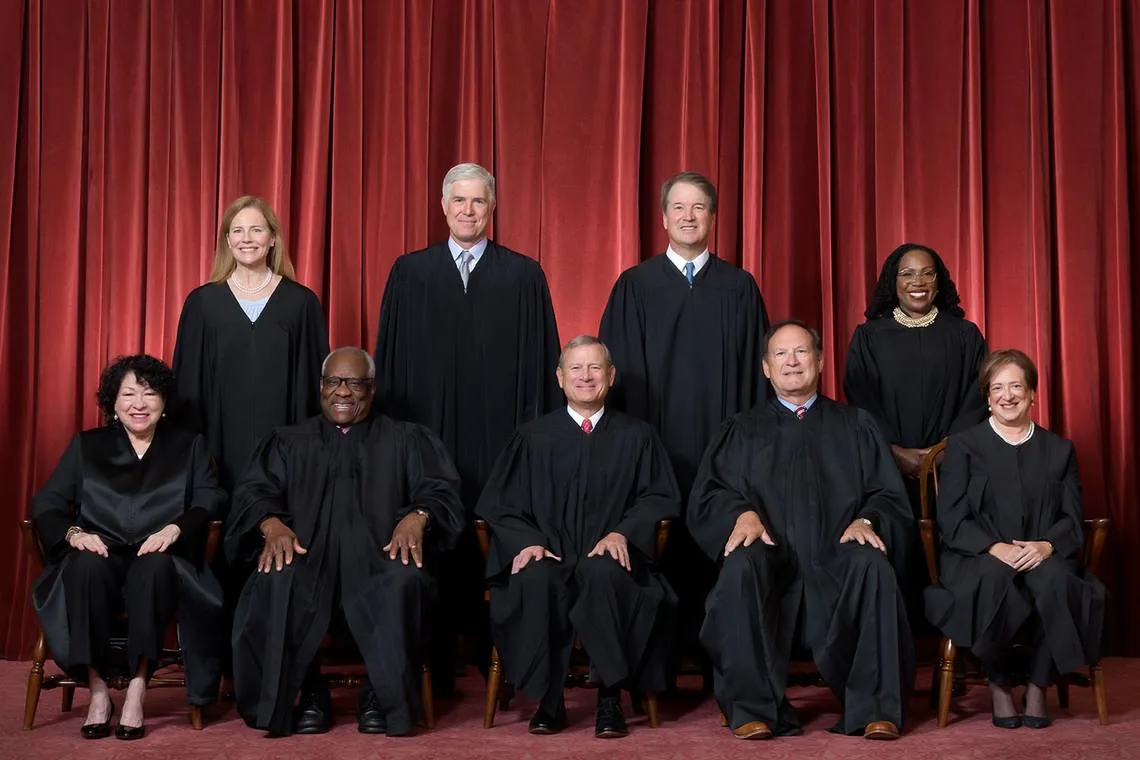
In a 6–3 decision, the justices struck down nationwide injunctions that had blocked Trump’s January 20 order, which aims to prevent the children of undocumented immigrants and certain visa holders from automatically receiving U.S. citizenship at birth. The ruling limits those injunctions to the jurisdictions where lawsuits were filed, meaning Trump’s order can now be enforced in most states, including immigration hotspots like Florida.
The high court’s majority opinion did not rule on the constitutionality of Trump’s order itself. Instead, it found that federal judges in Maryland, Massachusetts, and Washington state had overstepped their authority by issuing nationwide bans while legal challenges are still pending.
A Narrower Judicial Role
Writing for the majority, Justice Amy Coney Barrett said federal courts lack the authority to impose “universal” injunctions unless explicitly granted by Congress. “A universal injunction can be justified only as an exercise of equitable authority,” she wrote, “yet Congress has granted federal courts no such authority.”
She also noted that the Trump administration was likely to succeed in limiting such broad judicial blocks, based on the 1789 Judiciary Act.
Justice Sonia Sotomayor, writing in dissent and joined by Justices Elena Kagan and Ketanji Brown Jackson, sharply criticized both the administration and the court’s conservative majority. She warned the decision opens the door to a chaotic and unequal legal system, where constitutional protections vary by geography.
“This court plays along,” Sotomayor wrote. “Removing nationwide injunctions risks creating a patchwork of rights — where children born in one state are citizens, and in another, they are not.”
Trump Celebrates Ruling, Says Birthright Citizenship Was ‘For Slaves’
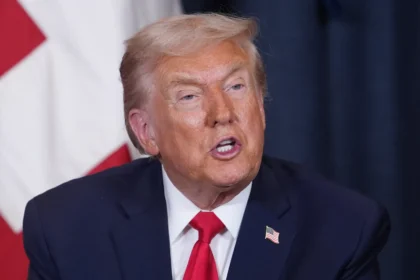
Speaking from the White House on Friday, Trump applauded the decision, framing birthright citizenship as a loophole being exploited by undocumented immigrants.
“It was meant for the babies of slaves,” he said, referencing the 14th Amendment, which was adopted after the Civil War. “It wasn’t meant for people trying to scam the system.”
His executive order, set to take effect in 30 days, directs federal agencies to deny passports and citizenship documents to children born in the U.S. if their parents are undocumented or on temporary visas. The administration argues such parents are not “subject to the jurisdiction” of the United States, and therefore their children are ineligible for birthright citizenship.
Legal scholars across the political spectrum largely disagree with that interpretation, pointing to the Supreme Court’s 1898 decision in United States v. Wong Kim Ark, which upheld the citizenship rights of U.S.-born children of immigrants — even if their parents were not citizens.
A Wave of Lawsuits — and Uncertainty
The Supreme Court’s ruling is already prompting a wave of new legal action. On Friday, the ACLU filed a class-action lawsuit in New Hampshire, and more are expected to follow across other states not currently protected by injunctions.
Immigration advocates, constitutional scholars, and public officials condemned the decision as a dangerous rollback of a foundational American right.
“This takes a wrecking ball to the fundamental values long held in our nation,” said Miami-Dade County Mayor Daniella Levine Cava. “If you are born in the United States of America, you are by birth a U.S. citizen.”
U.S. Rep. Debbie Wasserman Schultz (D-Fla.) wrote on X: “A right-wing Supreme Court majority let Trump rip away birthright citizenship. It’s a vile betrayal of our Constitution.”
Renata Bozzetto of the Florida Immigrant Coalition called it an attempt to “fracture our national identity” and warned that the administration is “trying to rule by decree.”
The Bigger Legal Strategy
Trump’s administration has focused less on overturning Wong Kim Ark directly and more on reshaping how executive authority interacts with federal courts. In March, the Justice Department asked the Supreme Court to curtail the power of lower courts to block federal actions nationwide—a legal maneuver many experts see as a test case for further attempts to rework immigration law.
“The goal is to limit legal opposition geographically,” said one legal analyst. “If opponents of the order have to sue in every jurisdiction, that makes challenges expensive, time-consuming, and inconsistent.”
In practical terms, this could mean that a child born in one state may be considered a citizen, while the same child in a neighboring state may not be—depending on whether an injunction is in place.
Broader Implications in States Like Florida
Florida, where immigration is a central political issue and home to hundreds of thousands of undocumented residents, could be among the most affected. Studies estimate nearly 1 million undocumented immigrants reside in the state, with over 280,000 children living in mixed-status families.
“This isn’t just about court process,” Bozzetto said. “This is about who gets to be American.”
A Fight Far From Over
Though Friday’s ruling doesn’t resolve whether Trump’s executive order is constitutional, it makes clear that his strategy to chip away at birthright citizenship is gaining ground — and that legal and political battles over the 14th Amendment are just beginning.
Judge Leo Sorokin of Massachusetts, who issued one of the original injunctions, previously wrote that Trump’s policy “blatantly violates” constitutional protections. Whether higher courts ultimately agree remains to be seen.
Meanwhile, polling shows the American public is skeptical of Trump’s push to end birthright citizenship. A recent Pew survey found that 56% of Americans oppose his executive order, while 43% support it.
Still, with the Supreme Court reshaped by Trump appointees, the legal ground is shifting — and fast.