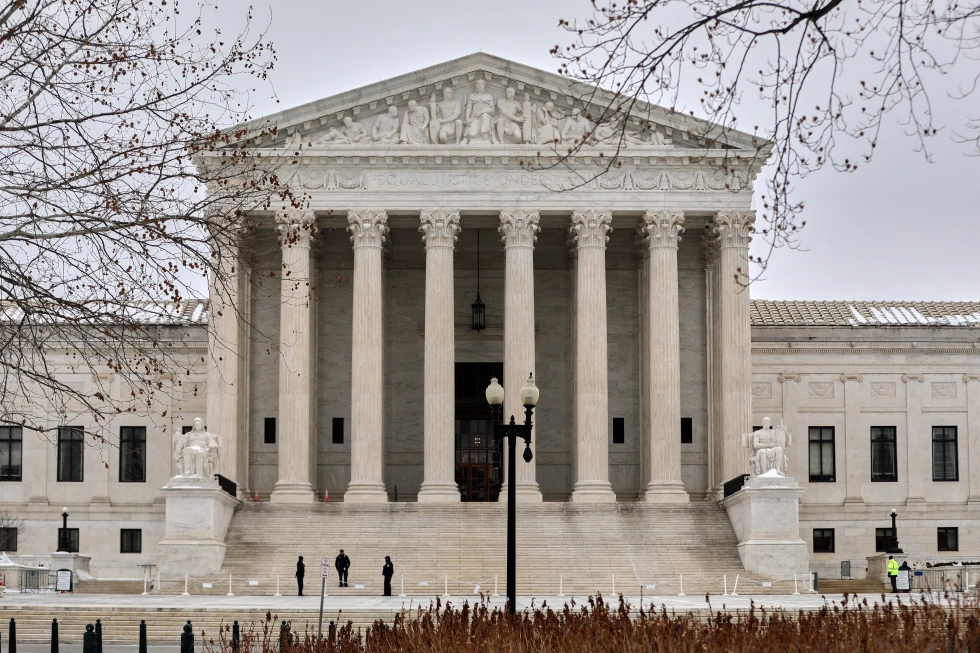

The U.S. Supreme Court on Monday issued an emergency order blocking a California law that prevented school districts from notifying parents if their children identify as transgender. The decision marks a significant victory for parental rights advocates and religious groups, signaling a major shift in the national legal battle over student privacy and gender identity.
The high court’s intervention temporarily halts AB 1955, a first-of-its-kind California law signed by Governor Gavin Newsom in 2024. The law prohibited school staff from disclosing a student’s sexual orientation or gender identity to any other person without the student’s express consent, effectively banning “parental notification” policies.
A Landmark Clash of Constitutional Rights
The case, brought by the Thomas More Society on behalf of Catholic parents, argued that California’s policy forced schools to “secretly facilitate” a child’s social transition. The plaintiffs contended that withholding such information violated their 14th Amendment right to direct the upbringing of their children and their First Amendment right to free exercise of religion.
In an unsigned order, the conservative majority noted that the parents held “sincere religious beliefs” regarding gender and that California’s restrictions likely placed an unconstitutional burden on those beliefs.
Conversely, the state of California argued that the law was a critical safeguard for student safety. State officials maintained that “outing” students could lead to domestic abuse or homelessness for LGBTQ+ youth who do not have supportive home environments.
The Federal Funding Ultimatum
This ruling does not exist in a vacuum. It escalates a high-stakes standoff between the Trump administration and the State of California.
In January 2026, Education Secretary Linda McMahon warned that California risked losing nearly $8 billion in annual federal education funding. The Department of Education’s investigation concluded that the state “egregiously abused” its authority by concealing gender transitions from families, citing violations of the Family Educational Rights and Privacy Act (FERPA).
“Children do not belong to the State — they belong to families,” McMahon stated following the investigation’s findings.
The Broader Judicial Trend
The Court’s decision on Monday aligns with a series of recent rulings favoring religious plaintiffs and state-level restrictions on transgender-related issues.
| Issue | Current Supreme Court Lean/Status |
| Gender-Affirming Care | Upheld state bans for minors (2025). |
| School Sports | Moving toward allowing bans on transgender athletes in girls’ sports. |
| Parental Notification | Emergency stay granted against California’s “privacy” protections. |
| Military Service | Current administration policy bars transgender service members. |
Dissent and Criticism
The decision was not unanimous. Justice Elena Kagan issued a sharp dissent, criticizing the court for using its “shadow docket” to upend state laws via emergency appeals rather than through the standard appellate process.
“This Court owes it to a sovereign State to avoid throwing over its policies in a slapdash way,” Kagan wrote, arguing that the court should have allowed the lower courts to finish their review before intervening.
What’s Next for California Schools?
While the Supreme Court’s order is temporary, it remains in effect while the legal challenge proceeds through the Ninth Circuit Court of Appeals.
- Immediate Impact: California school districts are no longer legally barred from adopting or enforcing parental notification policies.
- Legislative Response: Democratic leaders in Sacramento, including State Senator Scott Wiener, have pledged to continue fighting federal and judicial “attacks” on transgender youth.
- National Precedent: Similar cases out of Massachusetts and Florida are currently pending. This ruling suggests the Supreme Court is increasingly likely to take up a definitive case regarding parental rights versus student privacy in the 2026-2027 term.