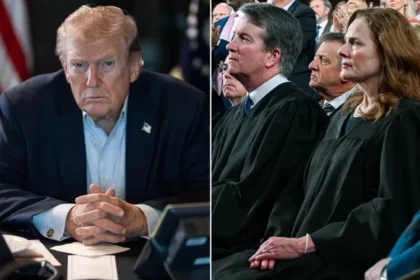

A new motion in a federal immigration class action has shifted attention from detention policy to a broader—and unusual—issue: whether the judiciary can stay independent amid the political heat surrounding cases tied to President Donald Trump.
In litigation brought by five Venezuelan men challenging their detention and possible removal from the United States, Delaware attorney Meghan Kelly asked the U.S. District Court for the District of Columbia for permission to submit a second amicus brief. In that proposed filing, she argues that threats and political retaliation aimed at judges could compromise the courts’ ability to operate as neutral decision-makers.
Why It Matters
The immigration case was already drawing national attention. Kelly’s filing escalates the stakes by asserting that judges—from trial courts up to the Supreme Court—may be facing improper pressure that could influence outcomes. If courts cannot reliably function without intimidation or retaliation, Kelly argues, due-process protections for detained immigrants are at risk and public confidence in the legal system erodes.
What To Know
Allegations of Threats to Judicial Independence
In a 44-paragraph motion, Kelly asks the court to consider constitutional concerns she says are directly connected to the integrity of ongoing proceedings. She argues federal courts must be able to guard against improper influence by officials in the executive and legislative branches.
A central claim in her motion is that federal judges, including Supreme Court justices, may have faced threats while deciding cases involving Trump. Kelly writes the court should be able to consider “whether the Supreme Court justices’ decisions in Trump and Snyder were based on threats against the justices which unfairly compromised their capacity to do what is right to serve their country by safeguarding the lives and freedoms of the people instead of themselves and their own at the country’s expense.”
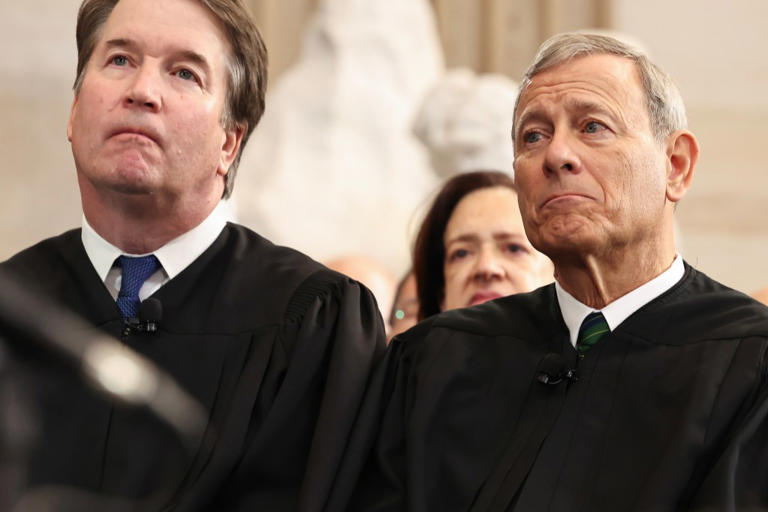
Justice Brett Kavanaugh authored the majority opinion in Snyder v. United States (2024), joined by Chief Justice John Roberts and the Court’s conservative bloc, while the three liberal justices dissented. Kelly also cites Trump v. United States (2024), the presidential immunity decision, and contends both rulings could warrant later scrutiny in the immigration case.
Claims of Pressure on Attorneys and Congress
Kelly’s motion also portrays the broader legal environment as increasingly coercive. She argues the judiciary is “in danger” when executive and legislative actors allegedly misuse power to influence outcomes—through threats directed at judges, parties, or even counsel.
She further raises concerns about the safety and independence of attorneys involved in the matter, including federal and state attorneys general. In particularly sweeping language, she claims Trump and allies have previously used the “threat of treason to kill members of Congress and Special Counsel Jack Smith,” and adds that “it is not far-fetched that he would use treason or even kill his own lawyers if they sought to do what is right.”
The article notes there is no public-record evidence that Trump or his advisers have made such threats, and that neither the plaintiffs nor the government have endorsed Kelly’s characterization.
Kelly also suggests Congress could seek to influence the case through impeachment threats or budgetary pressure. She asks the court to consider restraining actions that she believes could infringe on the plaintiffs’ due-process rights.
In supplemental notes, she repeats her concern that recent Supreme Court rulings “may be ‘based on threats’ to justices.” She also notes her prior amicus brief was accepted—an outcome she calls “the greatest honor of my life”—but says there is no indication another brief will be allowed. She adds that neither side supported her motion and claims that “to her horror, none intervened,” while “25 state attorneys general wrote in support of overturning this Court’s past orders on amicus at the U.S. Supreme Court level in this case.”
What This Could Mean for the Immigration Case
The underlying case—J.G.G. v. Trump—continues to seek classwide relief over detention and removal procedures. If the court grants Kelly’s request, it could broaden the dispute by injecting questions about judicial independence and potential political coercion into a case otherwise focused on immigration enforcement.
What People Are Saying
Kelly, describing her own safety concerns and what she frames as retaliation, wrote: “I am likely not going to be OK. I will receive more government backed threats. No one will protect me from,” and, alleging broader institutional risk, stated: “The court, the petitioners and our nation face national security threats by the collusion of Article I and Article II members to eliminate the rule of law that binds Americans as a people.”
What Happens Next
The immediate question is whether the judge will allow Kelly’s second amicus brief—something the court can decide at any time and without a hearing. The case itself will still move forward on the core legal questions about detention and removal procedures, while Kelly’s allegations may be acknowledged without being formally examined unless the judge concludes they are directly relevant.
The court could ask for responses from the government or hold a status conference, though motions like this are often either accepted into the record or set aside. Any major ruling on due process and enforcement practices would likely be appealed to the D.C. Circuit and could ultimately reach the Supreme Court.