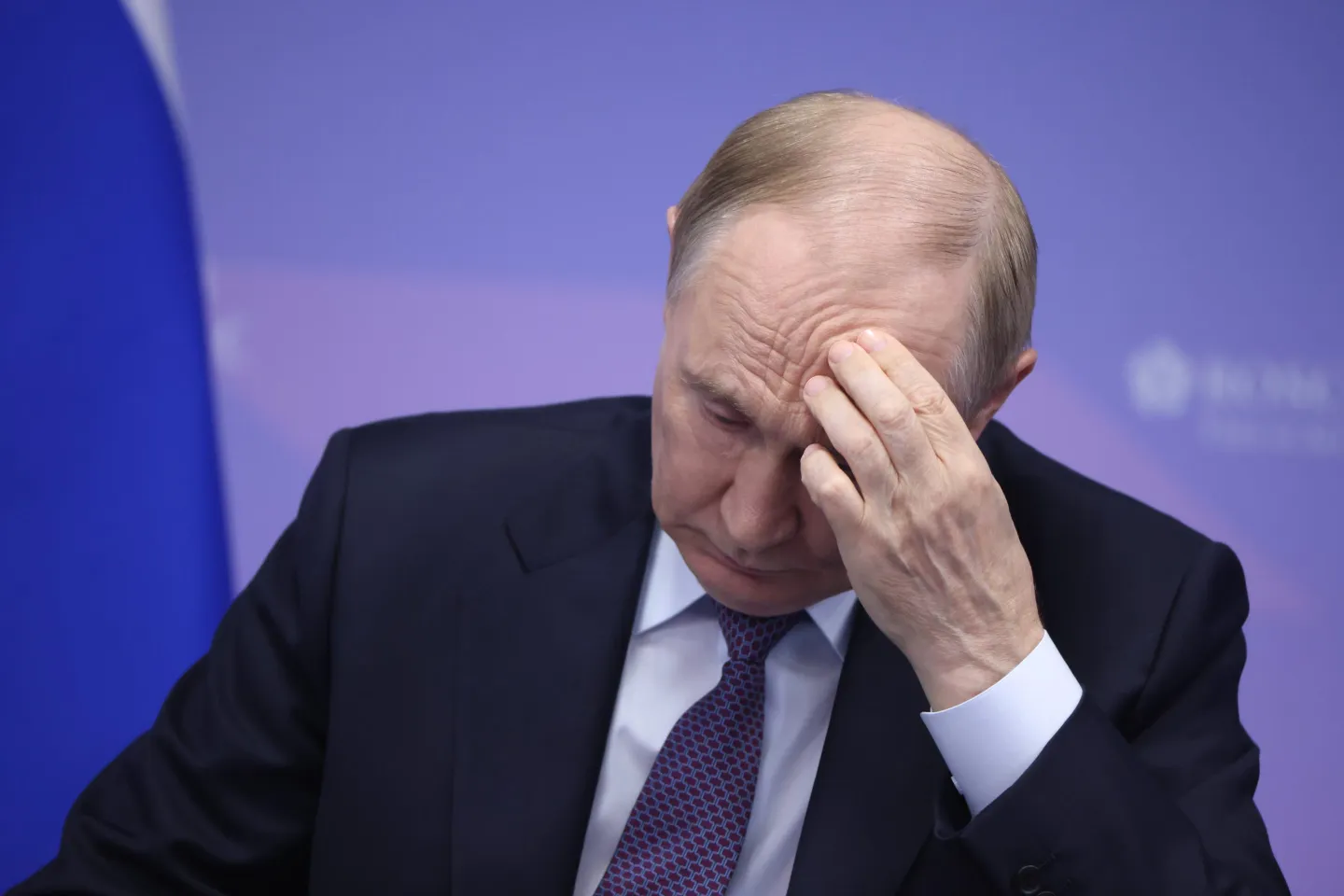

Four years after Russian President Vladimir Putin launched what the Kremlin initially described as a limited “special military operation,” the human and economic toll on Russia has far exceeded any pre-war calculation. What was widely expected inside Moscow to be a campaign measured in days has become a war measured in generations of lost soldiers, mounting debt, and deepening international isolation.
As the conflict crosses its four-year mark this February, a growing body of independent analysis and military data suggests Russia is not winning so much as it is slowly bleeding — gaining territory at rates slower than many 20th-century trench warfare campaigns, while sustaining losses that are reshaping the country’s demographic and financial future.
A War Russia Was Never Supposed to Fight This Long
The core of Russia’s fatal miscalculation, analysts say, was assuming Ukraine would fold quickly, that Western support would fracture early, and that a blitzkrieg-style advance would make a negotiated capitulation inevitable. None of those assumptions proved correct.
According to a January 2026 analysis by the Center for Strategic and International Studies (CSIS), Russian forces have advanced at an average rate of between 15 and 70 meters per day in their most prominent offensives — a pace slower than almost any major offensive campaign recorded in the past century, including some of the most static fighting of World War I.
In 2025, Russian forces seized approximately 4,831 square kilometers of Ukrainian territory, according to the same CSIS report — roughly 0.8 percent of Ukraine’s total land area. At that rate, analysts at the Austrian Institute for International Affairs estimate it would take Russia roughly 38 months just to consolidate control over the eastern territories it already claims by annexation.
The Casualty Ledger: Numbers the Kremlin Won’t Confirm
The human cost of Russia’s Ukraine war is staggering by any modern standard — and it’s a figure Moscow has never disclosed publicly.
CSIS projects that Russia had suffered nearly 1.2 million military casualties — killed, wounded, and missing — by the end of 2025, surpassing the losses of any major world power in any conflict since 1945. To put that in context: the combined U.S. killed, missing, and wounded in both the Vietnam War and the Korean War total fewer than 110,000. Russia’s confirmed dead alone, according to multiple estimates, now exceeds that figure many times over.
An independent count maintained jointly by BBC Russian and Mediazona — based on verifiable open-source records such as obituaries and court documents — placed confirmed Russian military deaths at over 152,000 as of late November 2025, with losses falling disproportionately on rural communities and ethnic republics far from Moscow.
British intelligence, cited by Russia Matters, estimated approximately 1 million Russian casualties including around 240,000 killed as of September 2025 — figures Russia’s ambassador to the United Kingdom publicly rejected without providing alternative data.
Russia’s War Economy: Running Hot, Burning Out
For the first two years of the conflict, Russia defied widespread Western predictions that sanctions would quickly collapse its economy. Wartime state spending, elevated energy prices, and redirected trade toward China and other non-Western partners kept growth afloat. But those cushions are thinning.
According to the International Monetary Fund, Russia’s GDP growth decelerated to approximately 0.6 percent in 2025, down sharply from annual rates exceeding 4 percent in 2023 and 2024. The IMF projects only 1.0 percent growth in 2026. Russian manufacturing, meanwhile, declined at its fastest pace since March 2022, according to CSIS.
To plug widening budget gaps, the Kremlin raised its value-added tax from 20 to 22 percent beginning January 1, 2026, and expanded the pool of businesses subject to mandatory VAT payments — measures economists describe as signs that wartime spending is now being shifted onto ordinary Russians and small businesses.
Russia’s oil and gas revenues — the financial backbone of the war effort — fell to approximately 8.47 trillion rubles (~$108.6 billion) in 2025, according to Reuters data cited by researchers, the lowest level since 2020 and a 24 percent decline from the year prior. Ukrainian drone campaigns have taken a measurable toll, with strikes reportedly disabling nearly 40 percent of Russia’s oil refining capacity at various points during 2025, according to Russian energy market data cited by Russia Matters.
Western sanctions, while unable to deliver a swift economic knockout blow, have continued to accumulate. The European Union extended its core economic sanctions through July 2026 and has continued to add new restrictions targeting Russia’s shadow fleet, dual-use exports, and state-run media figures.
In October 2025, the Trump administration imposed new sanctions on Russia’s two largest oil producers — Rosneft and Lukoil — a significant escalation from Washington’s earlier reluctance to add economic pressure. The Atlantic Council noted that the long-term structural damage from sanctions — including isolation from Western technology, foreign investment, and financial systems — will likely worsen Russia’s economic trajectory well beyond the war’s eventual end.
As of February 2026, direct negotiations between Kyiv and Moscow have not resumed. A U.S.-backed peace framework discussed in Geneva reportedly outlines a general structure, but key elements — including territorial arrangements and security guarantees — remain unresolved. Ukraine has indicated conditional openness to talks; Russia has stated it will not accept outcomes it views as deviating from its stated war aims.
President Zelenskyy, according to Financial Times reporting cited by Russia Matters, is expected to outline plans for wartime elections and a potential referendum on a peace deal — steps the U.S. has reportedly encouraged as part of any negotiated settlement.
For Russia, the painful arithmetic remains unchanged: enormous casualties, slowing economic growth, and territorial advances measured in meters per day. Whether Putin’s calculus changes depends less on battlefield maps and more on whether the combined weight of attrition, sanctions, and internal pressure becomes impossible to ignore.
Four years in, that weight is growing.
📌 Did You Know? When Russian forces crossed into Ukraine on February 24, 2022, U.S. intelligence assessments reportedly suggested Kyiv could fall within 72 hours. Four years later, Russia has suffered nearly 1.2 million military casualties — more than any major power in any conflict since World War II — and controls only a fraction of the territory it originally sought.