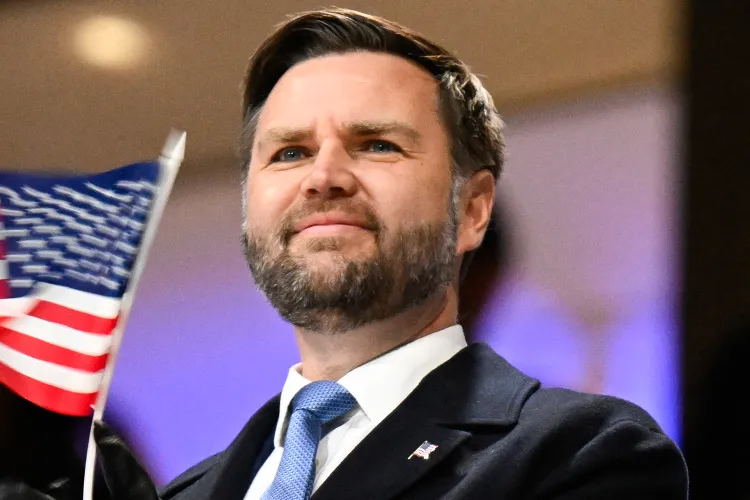

Vice President JD Vance has emerged as a central figure in the Trump administration’s efforts to broker an end to the Iran conflict, marking his most prominent role yet in foreign policy. President Donald Trump is closely monitoring his performance, even privately comparing him to Secretary of State Marco Rubio, a potential rival in the 2028 Republican presidential race.
According to sources familiar with internal discussions, Trump has repeatedly checked in with advisers on how Vance is handling negotiations, underscoring both the importance of the talks and the political stakes attached to their outcome.
Vance, once a skeptic of military intervention in Iran, is now leading diplomatic efforts alongside senior figures including Steve Witkoff and Jared Kushner. While the White House has publicly backed his leadership, Trump has signaled a mix of confidence and caution.
“If it doesn’t happen, I’m blaming JD Vance,” Trump joked at a recent Easter gathering, adding, “If it does happen, I’m taking full credit.”
The administration’s initial push for a ceasefire showed limited progress. A temporary halt in hostilities was secured, but a broader agreement remains elusive after recent talks in Islamabad. Vance remains on standby for a potential return to Pakistan if negotiations advance.
Behind the scenes, he has maintained direct contact with Pakistan’s military leadership, including Field Marshal Asim Munir, in an attempt to shape a framework for peace.
Despite downplaying his role publicly, Vance has been central in internal briefings. During a March Cabinet meeting, Trump turned to him first for updates on the conflict, bypassing traditional foreign policy channels.
Vance’s expanding role comes with political risks. A staunch Trump ally, he has publicly defended administration policies he previously questioned in private, including the Iran war. At the same time, he has attempted to carve out subtle distinctions.
At a recent event in Georgia, Vance acknowledged voter dissatisfaction with U.S. Middle East policy. “I recognize that young voters do not love the policy we have in the Middle East,” he said.
He also struck a measured tone in response to tensions between Trump and Pope Leo XIV, signaling respect for the pontiff while cautioning against commentary on political matters—remarks that drew criticism even from Republican leaders like Senate Majority Leader John Thune.
The outcome of the Iran negotiations carries significant implications for the administration. With approval ratings under pressure and midterm elections approaching, ending the conflict is viewed internally as critical to stabilizing political support.
Recent foreign trips have yielded mixed results. Vance’s visit to Hungary, where he backed Prime Minister Viktor Orbán, coincided with Orbán’s electoral defeat—raising questions about the administration’s global influence.
Still, Vance defended the outreach, framing it as a demonstration of loyalty rather than electoral strategy.
As negotiations with Iran continue, Vance’s performance is likely to remain under intense scrutiny—not only as a test of diplomatic skill but as a defining moment in his political trajectory within Trump’s orbit.