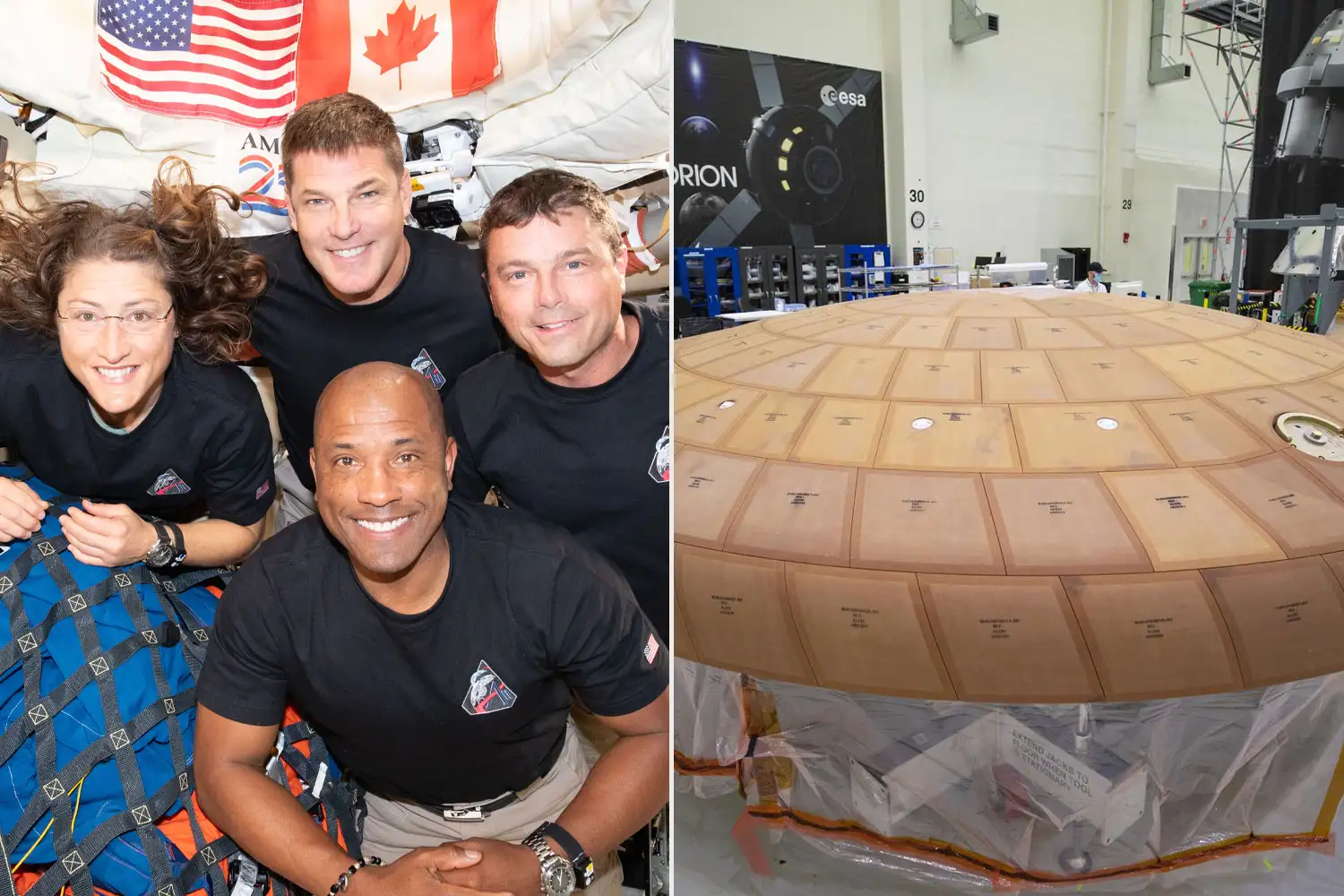

The Artemis II mission, the first crewed lunar voyage in over half a century, reached its most volatile climax Friday as the Orion spacecraft began its high-speed descent into Earth’s atmosphere. While the mission has successfully demonstrated key navigation and life-support systems over the past nine days, the final “13 minutes of terror” have placed NASA’s engineering under intense scrutiny.
Astronauts Reid Wiseman, Victor Glover, Christina Koch, and Jeremy Hansen are scheduled to splash down in the Pacific Ocean following a harrowing re-entry. During this phase, the capsule must withstand external temperatures reaching 5,000 degrees Fahrenheit—nearly half the temperature of the sun.
The safety of the crew hinges entirely on a single component: the thermal protection system. Despite NASA’s public confidence, the heat shield has been a point of significant internal and external debate.
During the unmanned Artemis I flight in 2022, the shield exhibited unexpected “charring” and material loss. Subsequent investigations revealed that gas pressure caused the protective layer to crack in areas where heating was actually less severe than predicted.
:max_bytes(150000):strip_icc():focal(749x0:751x2):format(webp)/Reid-Wiseman-Victor-Glover-Christina-Koch-Jeremy-Hansen-artemis-II-040126-2-c21beffdda4e4e15b67c5b5187416af2.jpg)
While NASA Associate Administrator Amit Kshatriya maintains that teams “unanimously agreed” the current design remains safe for crewed flight, critics argue the agency is repeating historical mistakes.
Charlie Camarda, a former NASA astronaut and leading thermal protection expert, issued a formal warning in an open letter to NASA leadership. Camarda suggested that launching the mission with known thermal flaws mirrors the organizational patterns that led to previous shuttle catastrophes.
“History shows accidents occur when organizations convince themselves they understand problems they do not,” Camarda wrote.
He estimated a 95% survival probability but noted the lack of a redundant backup system if the shield disintegrates. Conversely, NASA flight director Jeff Radigan emphasized that every system tested over the last nine days relies on these final minutes of flawless execution.
As the Orion capsule prepared for its descent, the crew transmitted personal messages to their families, balancing the professional gravity of the mission with the human reality of the risks involved.
“Every system we’ve demonstrated… depends on the final minutes of flight,” Kshatriya noted during a Thursday briefing.
NASA recovery teams are currently stationed off the California coast, awaiting the deployment of Orion’s parachute system. If successful, this mission validates the hardware necessary to return humans to the lunar surface. If the shield underperforms, it could trigger a fundamental restructuring of the Artemis program.