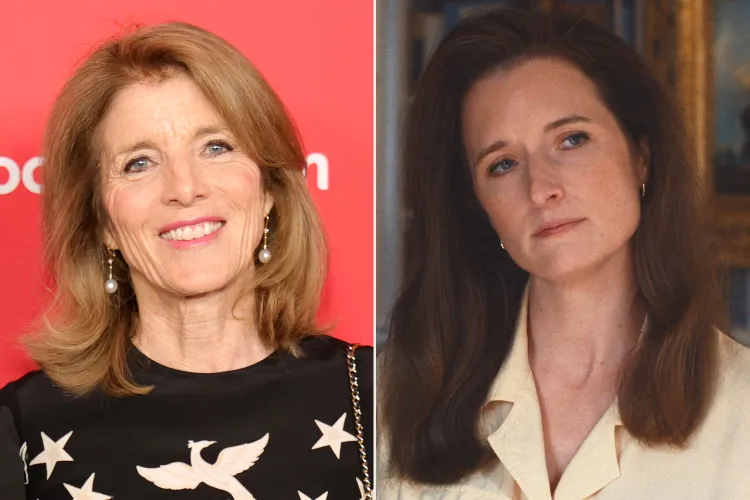

Caroline Kennedy reacted with humor to her fictional portrayal in FX’s Love Story: John F. Kennedy Jr. & Carolyn Bessette, even as her son, Jack Schlossberg, sharply criticized the series as misleading and exploitative.
Speaking on Next Question with Katie Couric on April 15, Schlossberg said he showed his mother a clip featuring Grace Gummer. “We were laughing so hard,” he said, recalling a scene where the character appeared distressed. “The person was freaking out… and we’re just laughing so hard, as if that’s how my mom acts.”
Despite the lighthearted reaction, Schlossberg dismissed the show outright, calling it “stupid” and emphasizing its fictional nature. “Keep in mind, it might be entertaining, but it’s fiction,” he said.
The FX series, created by Ryan Murphy, dramatizes the lives of John F. Kennedy Jr. and Carolyn Bessette-Kennedy. It has drawn scrutiny from those depicted or connected to the Kennedy family.
:max_bytes(150000):strip_icc():focal(756x253:758x255):format(webp)/Jack-Schlossberg-021026-f7b742bf13f241a68fe5b1cac821c7a4.jpg)
Gummer, the daughter of Meryl Streep, has defended her approach, stressing that she aimed to capture Kennedy’s “essence” rather than mimic her. “I gathered information all over the place… and got an energy sense,” she told ABC’s On The Red Carpet. In a separate interview, she expressed “admiration and respect” for Caroline Kennedy and hoped she “did right by her.”
Schlossberg, however, has been among the show’s most vocal critics. In a prior interview with CBS News, he described the production as a “grotesque display of someone else’s life” and accused Murphy of profiting from personal stories without meaningful connection to the family. He suggested that proceeds could instead support legacy institutions like the JFK Library.
The backlash extends beyond the Kennedy family. Actress Daryl Hannah, who dated Kennedy Jr. before his marriage, publicly condemned her portrayal in the series. Writing in The New York Times, Hannah called the depiction “categorically false” and warned it had led to harassment from viewers who mistook dramatization for fact.
“The actions and behaviors attributed to me are untrue,” she wrote, arguing that the series crossed from creative interpretation into false assertions about real conduct.
Still, Schlossberg struck a measured tone toward audiences. “I have no problem with people who liked the show,” he said, adding that renewed interest in his uncle reflects his enduring cultural appeal. “He was a smart, attractive person who cared about politics… just like I’m trying to do right now.”
The debate underscores a broader tension in Hollywood: where dramatized storytelling ends—and responsibility to real lives begins.