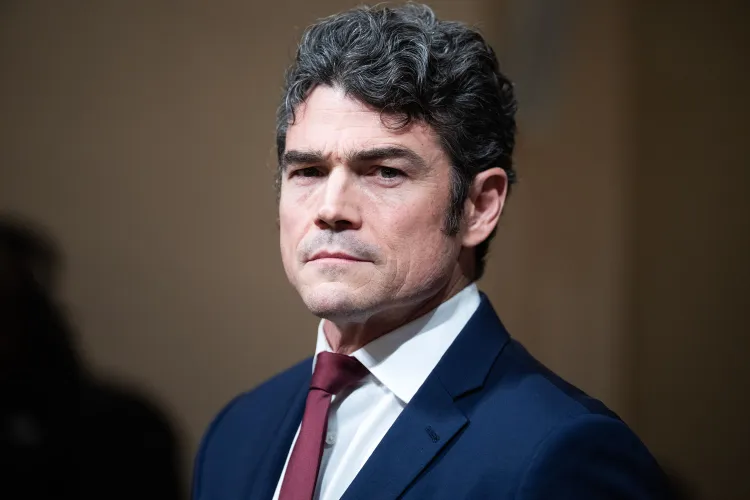

Joe Kent, the high-ranking former Army and CIA officer tapped by President Donald Trump to lead U.S. counterterrorism efforts, is the subject of an ongoing FBI investigation that predates his dramatic resignation this week, according to multiple reports.
Kent, 45, stepped down Tuesday as Director of the National Counterterrorism Center (NCTC), citing a moral “conscience” objection to the administration’s military engagement in Iran. However, sources familiar with the matter told Semafor, CBS News, and Fox News Digital that federal agents have been conducting a months-long probe into allegations that Kent leaked classified information during his tenure.
The White House has moved quickly to distance itself from the former director. Press Secretary Karoline Leavitt confirmed to reporters that Kent had been sidelined from the President’s intelligence briefings for “the last several months.” A senior administration official further characterized Kent as a “known leaker” within the intelligence community.
:max_bytes(150000):strip_icc():focal(749x0:751x2):format(webp)/benjamin-netanyahu-donald-trump-jerusalem-101325-2-69201deeef4046b0819ba861f9b63d3b.jpg)
A Public Break with the “America First” Platform
In a scathing resignation letter addressed directly to President Trump, Kent—a Gold Star husband and 11-time combat veteran—accused the administration of being manipulated into a “trap” in the Middle East.
Kent alleged that the war with Iran, which intensified following the “Twelve-Day War” in June 2025, was manufactured through a “misinformation campaign” led by Israeli officials and American media interests.
“Iran posed no imminent threat to our nation,” Kent wrote. “It is clear that we started this war due to pressure from Israel and its powerful American lobby.”
Kent’s departure marks a significant fracture in the administration’s national security apparatus. He claimed that the “America First” foreign policy platform—which he supported during Trump’s 2016, 2020, and 2024 campaigns—was “undermined” by an echo chamber intended to deceive the President into believing a swift victory was possible.
:max_bytes(150000):strip_icc():focal(749x0:751x2):format(webp)/Trump-Joe-Kent-031826-7048dec6559848368150a017cab3e2e7.jpg)
Allegations of Intelligence Suppression
Following his exit, Kent appeared on an interview with conservative commentator Tucker Carlson to defend his actions. He claimed the intelligence community was “largely stifled” and prevented from presenting data that contradicted the administration’s pro-war trajectory.
During the interview, Kent made several controversial claims:
- Nuclear Moderation: He argued that the former Iranian Supreme Leader, Ayatollah Ali Khamenei, had been moderating Iran’s nuclear program prior to his death.
- Lack of Intelligence: He asserted the U.S. had “no intelligence” suggesting a planned “big sneak attack” by Iran on American forces.
- Internal Silencing: Kent stated his voice was “squashed” before it could reach the Oval Office, forcing his hand to resign.
The Kirk Connection and Conspiracy Allegations
The fallout from Kent’s resignation has been compounded by his rhetoric regarding the September 2025 assassination of Charlie Kirk, a close advisor to the President.
Kent suggested to Carlson that Kirk’s opposition to the Iran war may have played a role in his death, despite the fact that 22-year-old Tyler Robinson has already confessed to the killing, citing a personal vendetta. Kent’s suggestion that “unanswered questions” remain regarding Kirk’s death follows a CNN report that Kent was previously chastised by FBI Director Kash Patel for attempting to illicitly access FBI systems to research the Kirk investigation.
Former Senate Republican Leader Mitch McConnell and other lawmakers have condemned Kent’s rhetoric, with McConnell labeling the allegations against Israel as “virulent Anti-Semitism.”
What’s Next?
The FBI’s focus on Kent’s alleged mishandling of classified data adds a criminal dimension to an already volatile political scandal. If the “months-long” probe results in charges, it could lead to one of the most high-profile prosecutions of an intelligence official in recent history.